30-day satisfaction guarantee or your money back
Call us : +33 257 880 074
 en
en 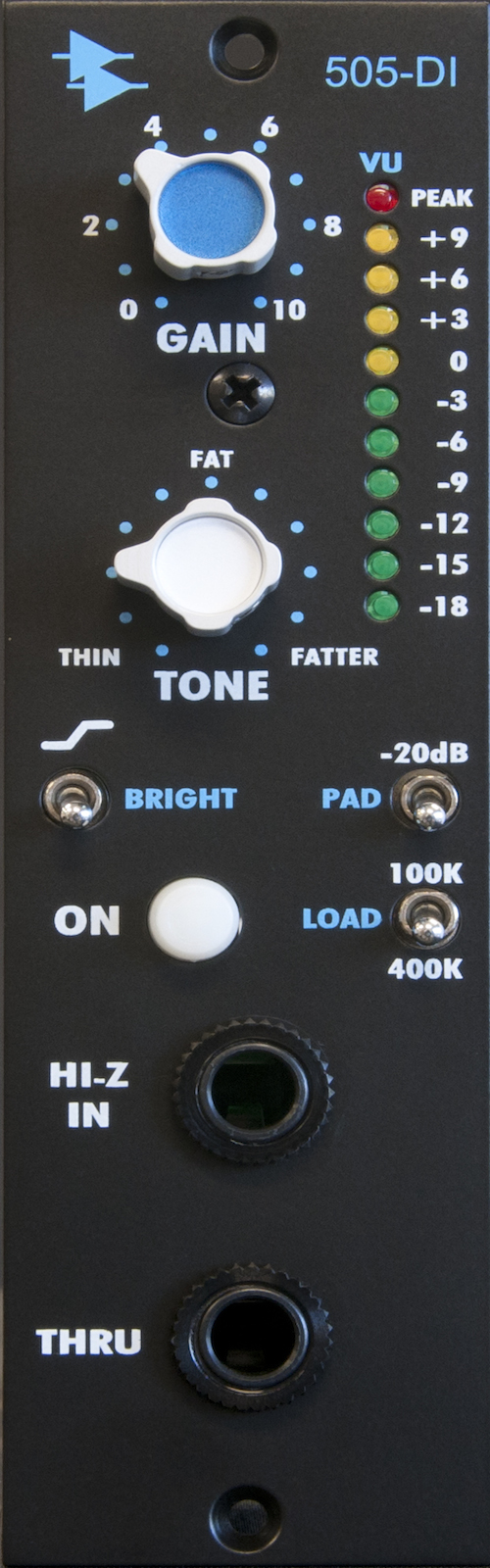
The API 505 DI follows a typically studio-oriented approach: a dedicated instrument input capable of transforming a direct input into a signal immediately usable in a mix, without multiplying processing stages. In API 500 format, it naturally integrates into a series 500 rack to form a compact and coherent front-end: a reliable instrument channel, always available, with quick controls that avoid "breaking" the sound through heavy equalization. The idea is simple: keep the signal path short, clean, and musical, while offering enough headroom to adapt to very different instruments.
This module is aimed at guitarists, bassists, keyboardists, and producers who regularly record direct inputs and want consistent results, without relying on an audio interface whose instrument input may vary in headroom and behavior. The 505 DI is suitable both for "clean" takes intended for further processing (amp simulations, reamping, external saturation) and for "finished" takes when the goal is to achieve a present sound right from capture.
The parallel output is a tangible asset for hybrid setups: for example, you can send the DI to the console or your converter and, in parallel, feed an amplifier for playing comfort, a tuner, or an effects chain. In recording, this facilitates double tracking (clean DI + amp) and secures the session: even if the amp is not suitable in the end, the DI track remains usable.
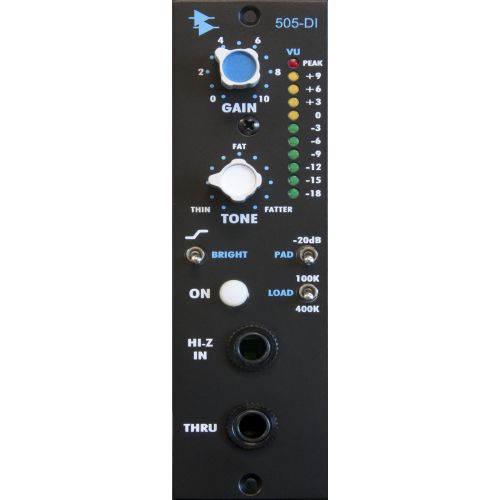
The 505 DI is designed to accept guitar, bass, or keyboard directly while minimizing the loading effect on Hi-Z pickups. Practically, this results in a more defined attack, better-preserved harmonics, and a less "muffled" low end compared to some generic instrument inputs. The gain control (up to 55 dB) is used to normalize the input level to reach a studio working level, up to +4 dBu, convenient for driving a processing chain, a compressor, or conversion without compromise.
The direct input can quickly become overwhelming in the low frequencies, especially with certain active basses, humbucker pickups, or keyboards with generous low end. The TONE control reduces this potential "mud" and achieves a tighter low end, easier to layer in an arrangement. Additionally, the BRIGHT switch adds clarity when you seek more articulation, pick presence, or better transient definition on funk, pop, or rock parts.
The benefit lies in combining both controls: depending on the instrument and playing style, the TONE and BRIGHT settings can limit or even eliminate the need for equalization during recording. You save time, make better decisions earlier, and keep a robust and clean signal for the rest of the mix.
Between a very powerful active bass, a keyboard with high-level presets, and a guitar with high-output pickups, gain differences are frequent. The -20 dB pad provides immediate headroom to avoid unwanted saturation and maintain healthy gain staging. The LED VU meter simplifies adjustment: you quickly visualize the level, making the take more reliable and repeatable, especially when multiple musicians take turns in a session. Finally, the parallel jack output preserves routing flexibility, essential for comfortable monitoring and smart recording.