30-day satisfaction guarantee or your money back
Call us : +33 257 880 074
 en
en 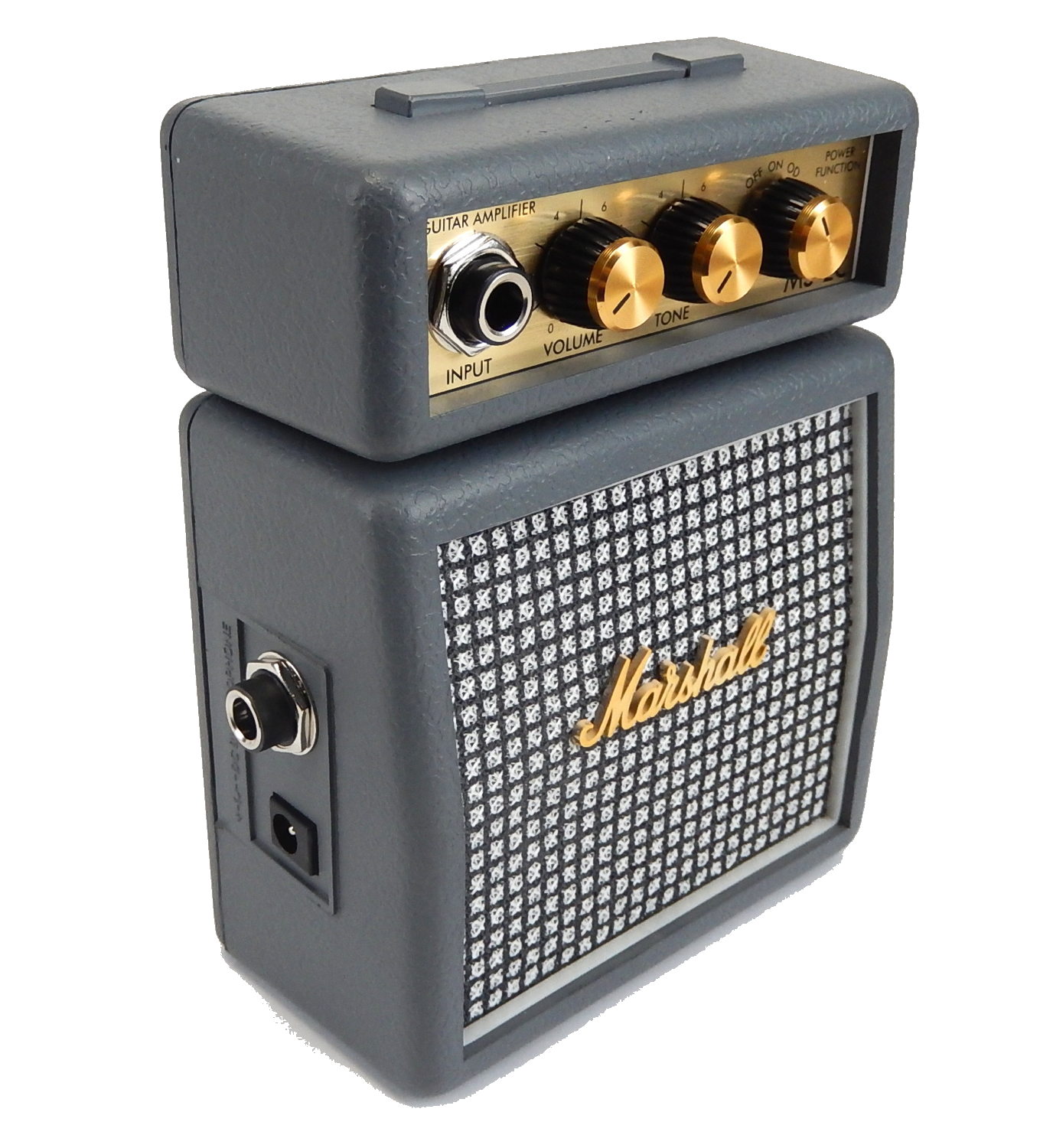
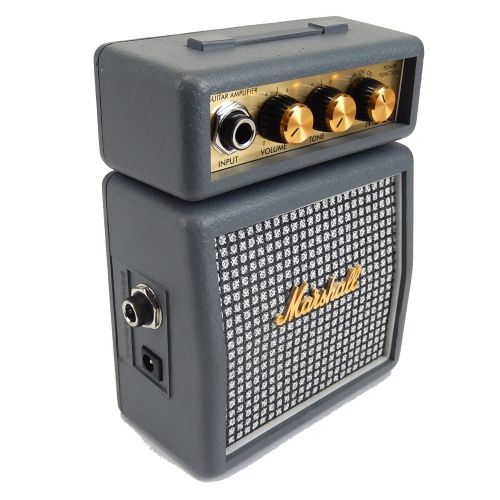
The Marshall MS-2 fits into the tradition of "micro amps" that capture the aesthetics and spirit of the brand's classic models in an ultra-compact version. Designed as a practice and backup amp, it primarily aims for immediate enjoyment: plug in your guitar, adjust volume and tone, and get that Marshall character without lugging around a combo. This "Classic" version in light grey adds a unique visual touch that evokes the universe of some of the brand's iconic finishes.
This mini amp is aimed at beginner guitarists who want a simple and motivating small amp, as well as traveling musicians looking for an ultra-light format to warm up backstage, on the road, in a hotel, or behind the scenes. It is particularly suited to styles that favor a direct and edgy tone (rock, punk, hard rock, gritty blues), but also remains useful for working on clean parts at low volume. In the studio, it can serve as a "color" tool for lo-fi textures, doubling, or quick ideas, especially if you like compact and close-miked sounds.
The MS-2's ergonomics focus on essentials: two channels to alternate between a cleaner register and a more pronounced distortion, plus a pair of Volume and Tone controls to adjust level and balance the spectrum (darker or brighter). The headphone output allows playing silently and can also serve as a headphone preamp output. In terms of straightforward simplicity, it embraces the "plug and play" spirit: no reverb, no effects loop, no MIDI, no footswitch connection, and no external speaker output.
With its transistor technology and small speaker, the MS-2 prioritizes immediate response, a compact grain, and a sharp attack. In clean, it delivers a simple sound useful for working on rhythmic placement and right-hand precision, with a naturally "tight" rendering due to the format. In overdrive, the amp highlights a more rock character: present mids, quick crunch sensation, and direct saturation, ideal for riffs and leads at low volume. It's typically the kind of mini amp you keep handy to play whenever inspiration strikes. Notably, this model has also been seen in artist use, notably as a practical and portable solution (for example Brian Ray).



 Certified
Certified
Certified
 Certified
 Verified
 Certified