30-day satisfaction guarantee or your money back
Call us : +33 257 880 074
 en
en 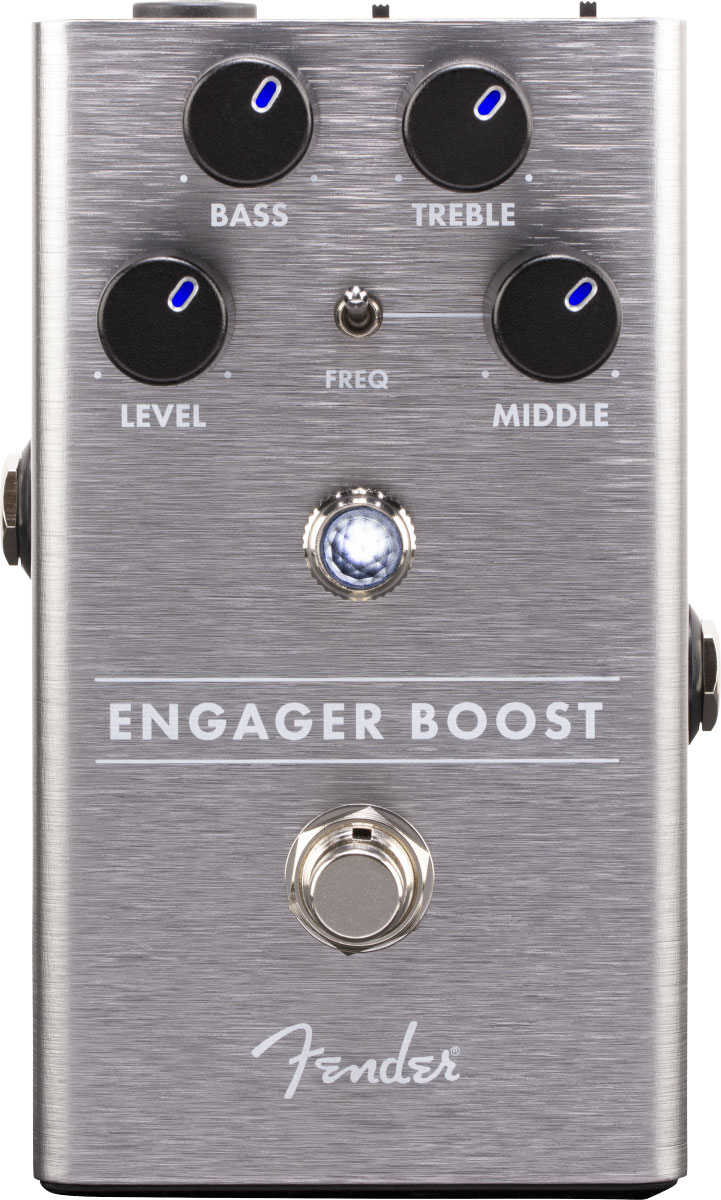
The clean boost is one of the oldest and most useful tools on a pedalboard: to highlight a passage, make a riff stand out, or add a bit more attack to an amp already on the edge of crunch. The Engager Boost fits within this tradition but with a very current approach: a comfortable level reserve, active EQ, and a mid-frequency selection to fine-tune placement in the mix. The result: a pedal that does not just "make it louder," but makes your sound stand out better.
This pedal is aimed equally at beginner guitarists looking for a simple solution to balance their levels and experienced musicians who want a precise boost for live and studio use. In blues and rock, it helps to fatten a clean tone and make an amp overdrive sing. In pop or funk, it serves to gain definition and presence without saturating. In a studio context, it can also act as a mini "EQ + level" to adapt a guitar to a take or arrangement without changing instruments.
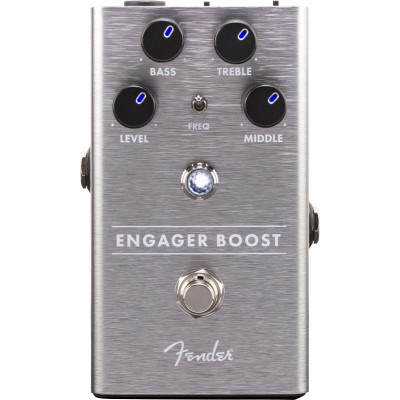
The Engager Boost combines a level control and a 3-band EQ. The Level, Bass, Middle, and Treble knobs allow you to adjust the volume increase while shaping the low end, presence, and openness of the sound. The Frequency switch is used to select the targeted midrange band, very useful for switching from an effective mid boost for solos to a scooped and wider setting for rhythms. Finally, the choice between True Bypass or Buffered Bypass optimizes treble retention and dynamics depending on cable length and number of pedals: buffered mode secures clarity on long chains; true bypass keeps a more direct approach.
The Engager Boost's signature is a clean, responsive, and usable boost: it can remain transparent if you keep the EQ neutral, or become a real shaping tool if you want to thicken single coils, tighten humbuckers, or make a guitar stand out in a dense mix. The pedal responds well to playing nuances and easily sits before an overdrive to increase gain, or after distortion pedals for a cleaner volume boost. Among users, it is notably found in setups associated with guitarists like Adrian Belew and Chris Buck, proving its value for both expressive tones and precise control in live situations.