30-day satisfaction guarantee or your money back
Call us : +33 257 880 074
 en
en 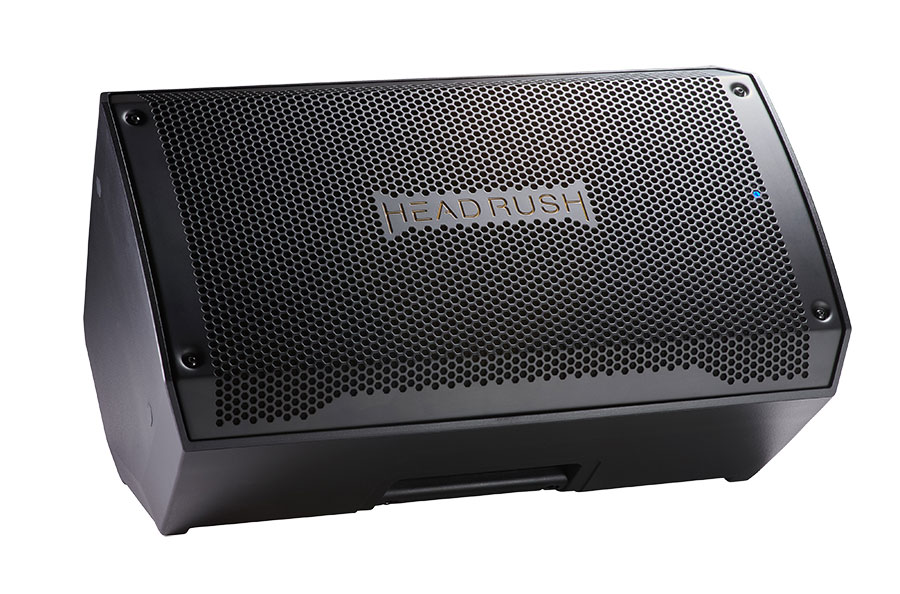
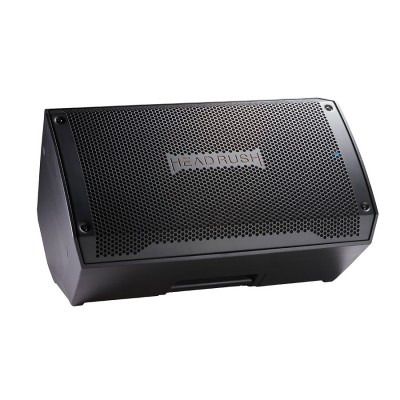
The FRFR-108 MK2 fits into the rise of "ampless" setups: a modeler or simulation pedalboard sends a signal already "ready to mix," and the FRFR speaker faithfully reproduces it. At HeadRush, this 8-inch format represents a compact solution designed to accompany the modern musician from home to rehearsal, while remaining credible on small gigs when traveling light. It stands as a practical alternative to bulkier systems, with a philosophy focused on simplicity and efficiency.
The HEADRUSH FRFR-108 MK2 targets guitarists and bassists playing with multi-effects, modelers, or pedalboards with cabinet simulation who want to hear exactly the programmed sound in their presets. It suits intermediate musicians seeking a reliable and quick-to-adjust speaker, as well as professionals looking for a lightweight, consistent monitor from gig to gig. In home studios, it serves as a "PA-style" monitor to regain the sense of air and projection of a PA system, while in rehearsal or on stage it makes an excellent nearfield monitor. Style-wise, it excels whenever clarity is needed (funk, pop, worship, ambient) while maintaining impact for rock, metal, and heavy modern distortions.
The FRFR-108 MK2 adopts a clear interface, designed for current rigs: two combo XLR / 6.35mm TRS jack inputs with independent volume controls and clip LEDs, convenient for connecting a modeler and a second source without an external mixer. The Bluetooth 5.0 with dedicated volume control simplifies adding backing tracks or music between sets. For stage integration, the XLR output allows daisy-chaining to a second speaker or sending a signal to a console depending on your setup. Finally, the high-pass filter helps avoid overwhelming bass in small rooms, and the ground lift switch can reduce some unwanted noise when powering multiple devices on different circuits.
Here, the goal is not to "sound like a guitar cabinet," but to reproduce a modeling signal with a neutral, wideband, and precise rendering. The 8-inch speaker provides a fast response and good definition in the midrange, highlighting attack, palm mutes, and presence in the band. The 1-inch tweeter delivers the brightness and detail of delays, reverbs, pitch shifters, and harmonizers, very appreciable with modern sounds and detailed IRs. The result: a more "studio/PA" feel than "combo," with a clear image and good nuance reading, ideal for hearing on stage a sound close to what you crafted on headphones or monitors.



 Certified
 Verified
 Certified