30-day satisfaction guarantee or your money back
Call us : +33 257 880 074
 en
en 
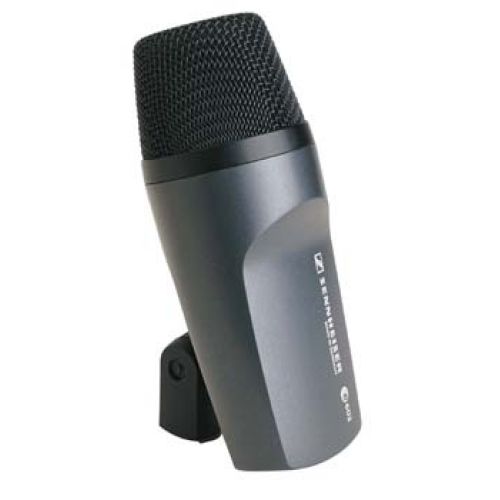
Designed for low percussion and high-energy instruments in the low-frequency range, this cardioid microphone addresses a very specific need: to achieve a bass that is both massive and usable, without losing attack definition. Its design combines a high-performance moving coilwith a large-diameter capsule, a relevant duo to handle high levels and maintain precise transient response on sources often tricky to capture (kick drum, bass amp, tuba, etc.).
Its cardioid directivity is a major asset in modern contexts (tight stages, powerful monitors, multiple microphones): it helps keep focus on the targeted instrument and stabilizes the overall mix balance, especially when several microphones coexist in the same area.
This microphone is intended for drummers, sound engineers, backliners, and home studio userswho want reliable low-frequency capture without spending endless time "saving" the sound with EQ. It is particularly suitable for:
* Kick drum: to achieve a solid low end and a clear attack, useful in both rock and contemporary music requiring a readable hit.
* Bass amplifier: to capture the speaker cabinet's body while preserving the dynamics of playing attacks.
* Tuba and other low brass: for a generous foundation, with good control of transients and playing variations.
Thanks to its directivity-independent response, it maintains appreciable tonal coherence when placement must be adjusted urgently (stage changes, stand constraints, proximity to other sources).
The goal is not just to go "low," but to do so with control. The specified frequency response (20 - 16,000 Hz) and optimization in the low end allow building a solid foundation, useful for adding weight to the kick drum or bass without turning the mix into an indistinct mass. The result: a firmer low end that stays in place more easily.
In low-frequency sources, the attack is often the first thing to get lost. Here, the ultra-light moving coilcontributes to fast transient reproduction: you gain definition on the hit, playing precision, and perceived "punch." This is especially useful when trying to highlight the articulation of a kick drum in a dense mix or preserve the character of a bass amp.
The cardioid directivity, combined with good attenuation of other sources, helps limit bleed (snare, toms, guitars, monitors) and improves feedback margin. In practice, this results in a cleaner sound and simpler processing: fewer extreme corrections, fewer problems that reappear as soon as the musician moves.
The presence of a hum compensation coilis a real advantage on stages and installations where the electrical environment can be noisy (power supplies, lighting, proximity to transformers). It helps reduce unwanted hum-related noise to preserve low-frequency clarity where such disturbances can quickly become intrusive.
The integrated stand threadfacilitates mounting, secures positioning, and speeds up stage changes. A detail that matters daily: fewer adapters, fewer handling steps, and stable placement even in tight configurations.



 Verified