30-day satisfaction guarantee or your money back
Call us : +33 257 880 074
 en
en 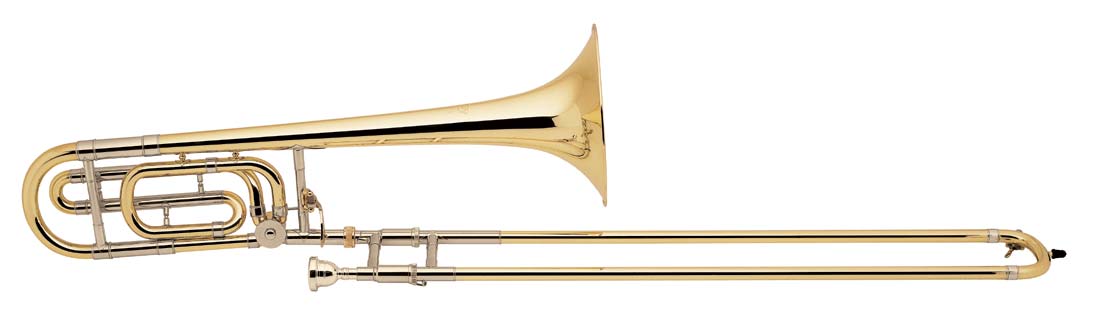
Vincent Bach represents a rare case in brass history: a demanding musician combined with an engineer, obsessed with manufacturing precision. After a disappointing experience related to a mouthpiece, he sought impeccable quality and started producing mouthpieces in New York in 1918. The venture then expanded to instruments: the first trumpets appeared in 1924 and quickly established themselves as a reference, to the point of inspiring the name Bach Stradivarius.
Bach trombones followed shortly after (1928) and firmly established themselves in sections: a clear sound signature, consistent manufacturing, and reliability that reassures both orchestral musicians and soloists. The brand later joined Conn-Selmer, and Vincent Bach ensured the transmission of his methods to preserve the DNA of his instruments. Even today, the Stradivarius label remains associated with concert-level demands, designed to last and support a career.
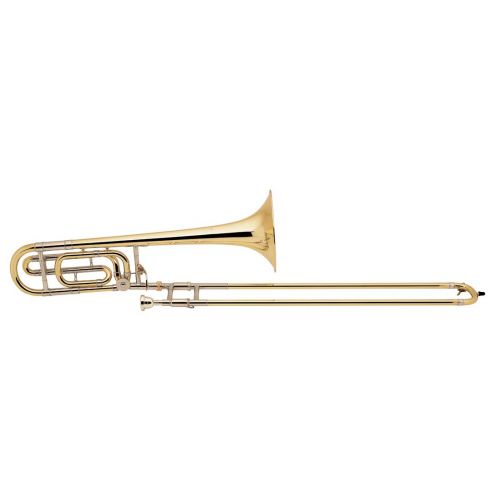
This trombone is primarily aimed at intermediate to advanced musicians seeking a stable instrument capable of supporting sustained technical progress, as well as professionals who want a reliable daily tool. The Bb/F configuration (with the F attachment) is particularly relevant whenever the repertoire requires flexibility in the low register, smoother transitions, and a wide dynamic range.
In terms of styles, it is naturally found in symphony orchestras, wind ensembles, and brass ensembles, where intonation, homogeneity, and projection are decisive. It also suits pop and studio contexts very well when a clean attack and clear tone are sought, while maintaining body and presence.
The tonal character of a trombone strongly depends on the bore (internal diameter of the main slide) and the bell (flared section). Here, the ML bore.525'' = 13.34 mm offers an excellent compromise: enough breadth to support a section in concert, while retaining responsiveness and precise articulation. The 8'' Ø bell = 203 mm, made of brass and crafted in one piece, promotes a homogeneous response and natural projection, with a balanced timbre that remains controllable in forte dynamics.
The slide directly contributes to playing comfort and clean attacks. The combination of inner slide: chrome-plated nickel silver and outer slide: brass aims for smooth and durable gliding, while the slide brace: nickel silver adds rigidity and stability to the assembly. The lacquer finish provides practical daily protection and a classic appearance, appreciated both on stage and in rehearsal.
To preserve your instrument's smoothness and longevity, plan for slide cream or grease (with water spray), a mouthpiece brush, and a trombone cleaning swab. A microfiber cloth is also useful for maintaining the lacquer finish and reducing marks after playing. Finally, a trombone stand is a good addition to secure the instrument during breaks in rehearsal.