30-day satisfaction guarantee or your money back
Call us : +33 257 880 074
 en
en 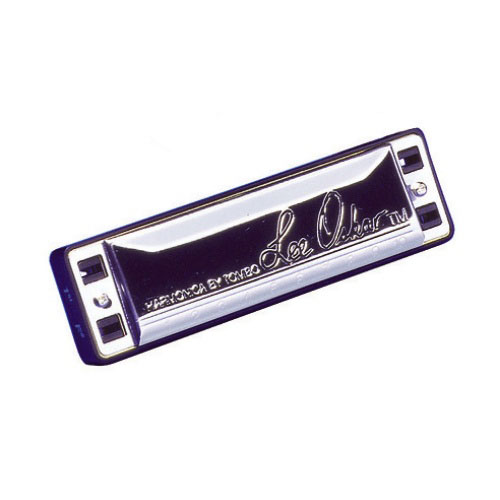
The diatonic harmonica in major tuning has established itself as a reference in popular music thanks to its immediate playing logic: chords available on blow and draw, an accessible melody, and a strong expressive capacity. It is precisely this architecture that favored its adoption in Blues and, by extension, in Rock, Folk, and Country. In Jazz, it is widely used for its color and phrasing, especially when seeking a "roots" approach or a more direct sonic signature.
This model is suitable both for beginners who want to discover the logic of the diatonic, and for intermediate harmonica players looking for a specific key to play with a band. In Eb Major, you will feel particularly comfortable in contexts where transposing instruments (saxophones, trumpets, etc.) are present, or when certain pieces are naturally written/arranged in this harmonic color.
Regarding styles, the major diatonic series is most often chosen for Blues (riffs, vocal responses, solos), Rock (hooks and ambiance parts), Folk/Country (singing melodies and accompaniment), and Jazz (expressive phrases, articulation, and dynamics). Depending on your practice, this Eb can become an essential "complementary" key alongside the most common keys.
A major diatonic harmonica offers a clear response on the natural notes of the key, with a very direct playing feel: the sound production is generally easy on the middle notes, and the instrument favors a percussive phrasing (clean attacks, rhythmic playing) as well as a more legato style. Projection depends greatly on your embouchure and air management: by working the air column, you achieve a fuller and more stable sound, particularly useful for Blues licks and Folk melodies.
On the "design" side, the diatonic harmonica is distinguished by its construction in components (body/comb, reeds, covers). This architecture contributes to the balance between comfort, airtightness (quality of air retention), and response precision. Even without going into material specifications, keep in mind that perceived quality in use mainly depends on note consistency, uniformity between holes, and ease of controlling dynamics.
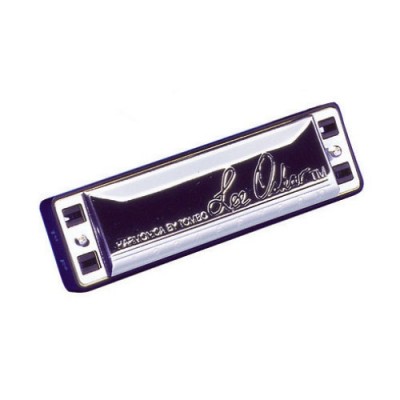
A diatonic harmonica is tuned around a major scale in a given key: it excels for Blues, Folk, and Country, and allows very expressive playing with technique (inflections, effects, timbre variations). Conversely, a chromatic harmonica provides access to all notes via a dedicated mechanism, making it very versatile for certain Jazz and Classical compositions. The product presented here is indeed a diatonic harmonica in Eb Major, designed to deliver the typical playing feel and color of the major series.
To preserve your instrument and maintain comfortable playing hygiene, you can opt for a universal protective case (for transport and storage), as well as a soft cloth to wipe the exterior after use. Storing it away from humidity and shocks remains the best way to keep a stable response over time.