30-day satisfaction guarantee or your money back
Call us : +33 257 880 074
 en
en 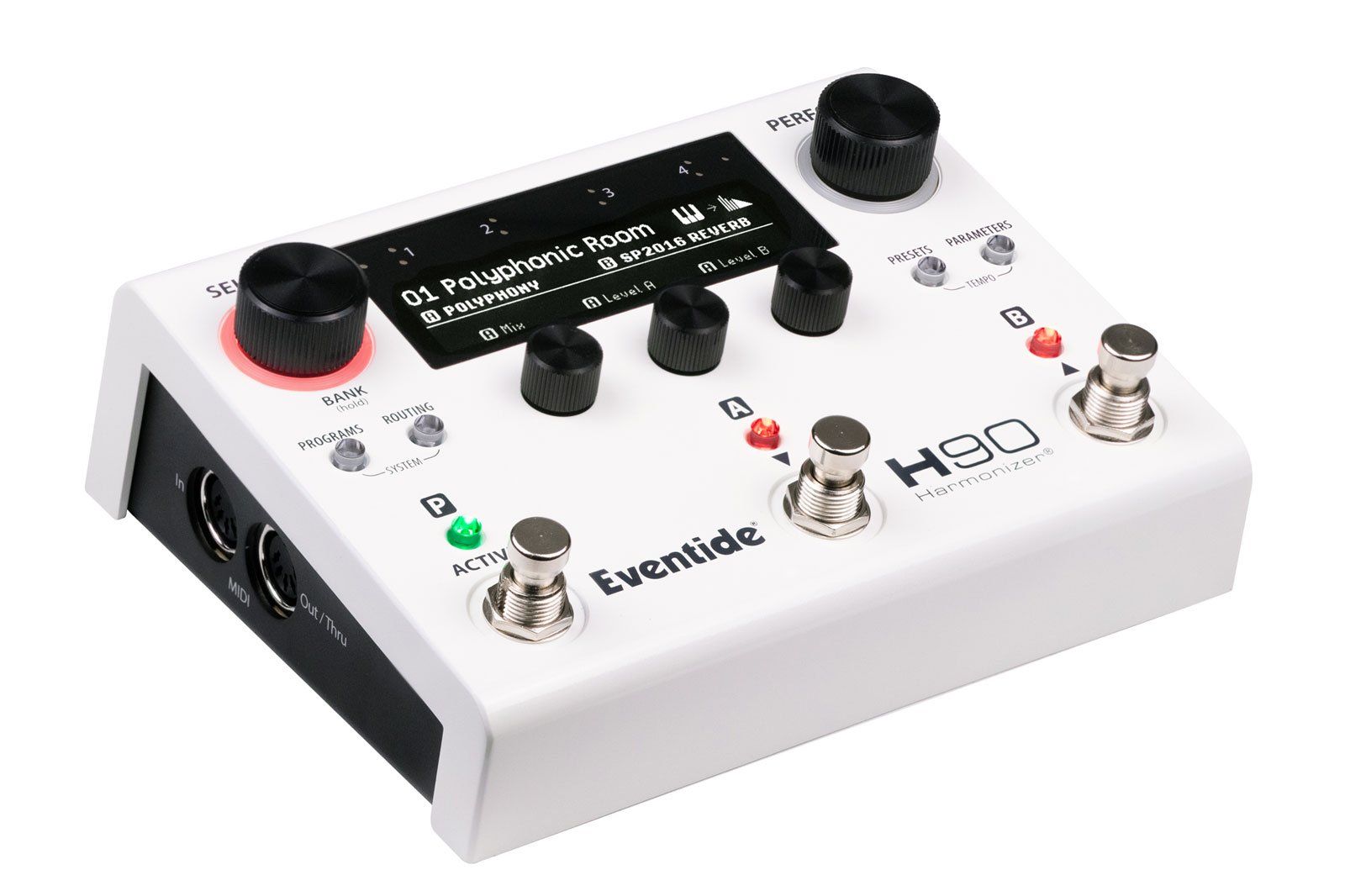
The H90 is rooted in Eventide's "Harmonizer" DNA, a landmark brand in creative effects for decades. It carries forward the spirit and a broad algorithm base from the H9 Max, while stepping up with a modern ARM architecture derived from the brand's high-end processing technologies. The result: more DSP power, improved performance on existing algorithms, and access to a new generation of advanced effects, notably low-latency polyphonic pitch-shifting via SIFT technology.
The H90 targets musicians seeking a professional multi-effects unit without compromise: guitarists, bassists, keyboardists, and sound designers. It excels in rock, pop, metal, blues, prog, ambient, and electronic music, equally suited for crafting "mix-ready" sounds in the studio or securing a live set with quick changes. If you like stacking reverb + delay, creating harmonizations, or switching from experimental textures to classic tones with one click, it quickly becomes the centerpiece of your rig.
The "Twin-Turbo" concept allows combining two algorithms within the same preset, with series or parallel routing and smooth spillover during preset changes. The two mono insert points (or one stereo insert) facilitate integrating external pedals exactly where you want them. The dual mode enables advanced scenarios: four-cable method, or simultaneous processing of two independent stereo signals.
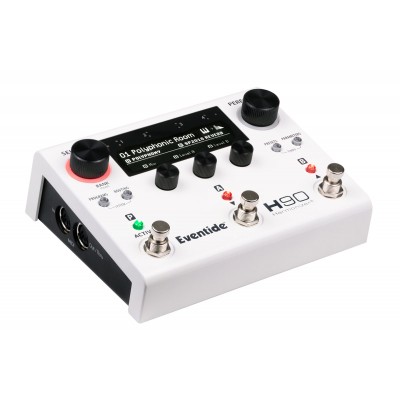
For the stage, the front panel has been optimized with five push buttons, seven LED buttons, and an OLED screen. In PERFORM mode, you get six programmable footswitches, plus three HotSwitches to trigger multiple instant variations. Control extends via two expression/control inputs, MIDI (DIN), and USB-C (control, updates, MIDI), with a built-in tuner. Editing and management (presets, playlists, updates) are also done via the dedicated H90 Control software on Mac or PC.
The H90's sonic signature blends definition, depth, and creativity. You get precise delays (up to "bouquet" ambiances), rich modulations (phaser, flanger, vibe), reverbs capable of filling space without muddying the attack, and especially responsive and musical pitch treatments (including polyphonic). Depending on the chosen algorithm, the sound can remain very clean and modern or, conversely, deliberately textured for "otherworldly" effects. The dynamics respond well to playing: subtle, it enhances your base tone; pushed, it becomes a true expressive instrument.

 Certified