30-day satisfaction guarantee or your money back
Call us : +33 257 880 074
 en
en 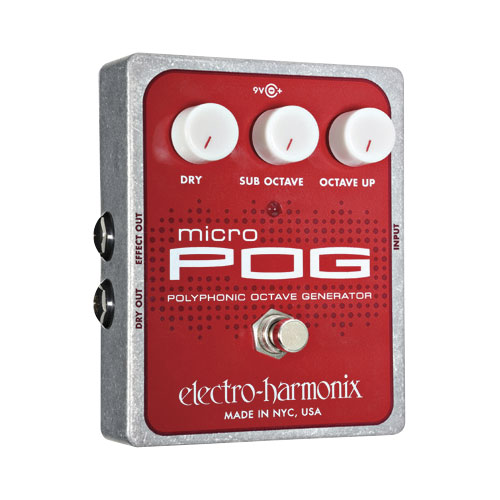
The octaver is an essential effect for transforming an instrument's role in a mix. Historically used to thicken a line, simulate a second instrument, or create an "organ" feel, it is now sought after for more musical textures capable of respecting chord playing. With its polyphonic processing, this pedal aims precisely for a more natural result: instead of "smearing" attacks or getting lost when playing multiple notes, it maintains stable tracking, ideal for string doubling style sounds.
Its goal is clear: to give you the illusion of a wider, richer instrument, as if you had added extra strings. On guitar, the upper octave delivers that shimmering "12-string" character, while the lower octave reinforces the low end for more massive riffs. On bass, the upper octave adds presence and attack, perfect for recreating the "8-string" spirit that cuts through the mix.
This pedal is designed for both guitarists and bassists who want to expand their palette without complexity. Thanks to its three direct controls, it suits beginners seeking immediate results as well as experienced players who want an effective, musical, and quick-to-adjust octaver on a pedalboard.
Style-wise, it naturally fits in rock (thicker riffs), pop (clean and bright "12-string" textures), funk (clean lines with subtle upper octave), ambient (pads and doubling), and even heavier contexts where the lower octave thickens palm-muted riffs. In the studio, it allows you to "double" a part without re-recording. Live, it provides an immediate sense of width, especially useful in trios or setups where you want to fill the space.
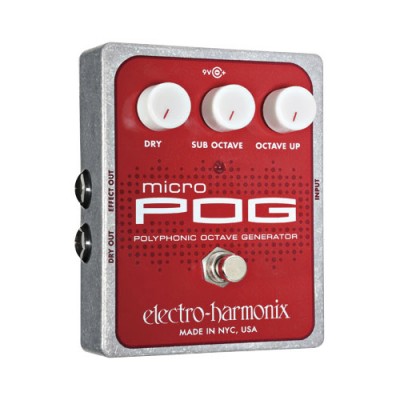
The interface focuses on essentials: Octave acts as the main effect level, while lower octave and upper octave let you independently dose each register. The idea is to build your sound like a mix: a touch of upper octave to add air and definition, a lower octave to solidify the bottom end, or both for a more spectacular result.
The polyphonic aspect is crucial if you play chords, double-stops, or arpeggios: the output remains more coherent and "instrument-like," helping achieve a credible 12-string simulation (brightness, shimmer, doubled string sensation). On bass, the "8-string" principle is ideal for adding bite and extra presence, especially when you want the bass to temporarily take on the role of a wider harmonic instrument.
Expect an effect oriented towards thickness and width rather than a mere gimmick transposition. The upper octave brings brightness, a chorale quality, and projection that immediately recalls a 12-string guitar, particularly effective on clean tones, light crunch, and arpeggios. The lower octave reinforces the foundation and adds weight: useful for thickening a chorus, beefing up a riff, or making a bass line stand out without raising the overall volume.
The polyphonic character favors a more stable feel on chords: attacks remain clear, and the effect sits more easily in a mix. By balancing the two octaves, you can go from a subtle, discreet "double" to a bold transformation that fills the space, perfect for giving the impression that a second instrument is playing with you.


 Verified
 Certified
Certified
Certified
Certified
Certified