30-day satisfaction guarantee or your money back
Call us : +33 257 880 074
 en
en 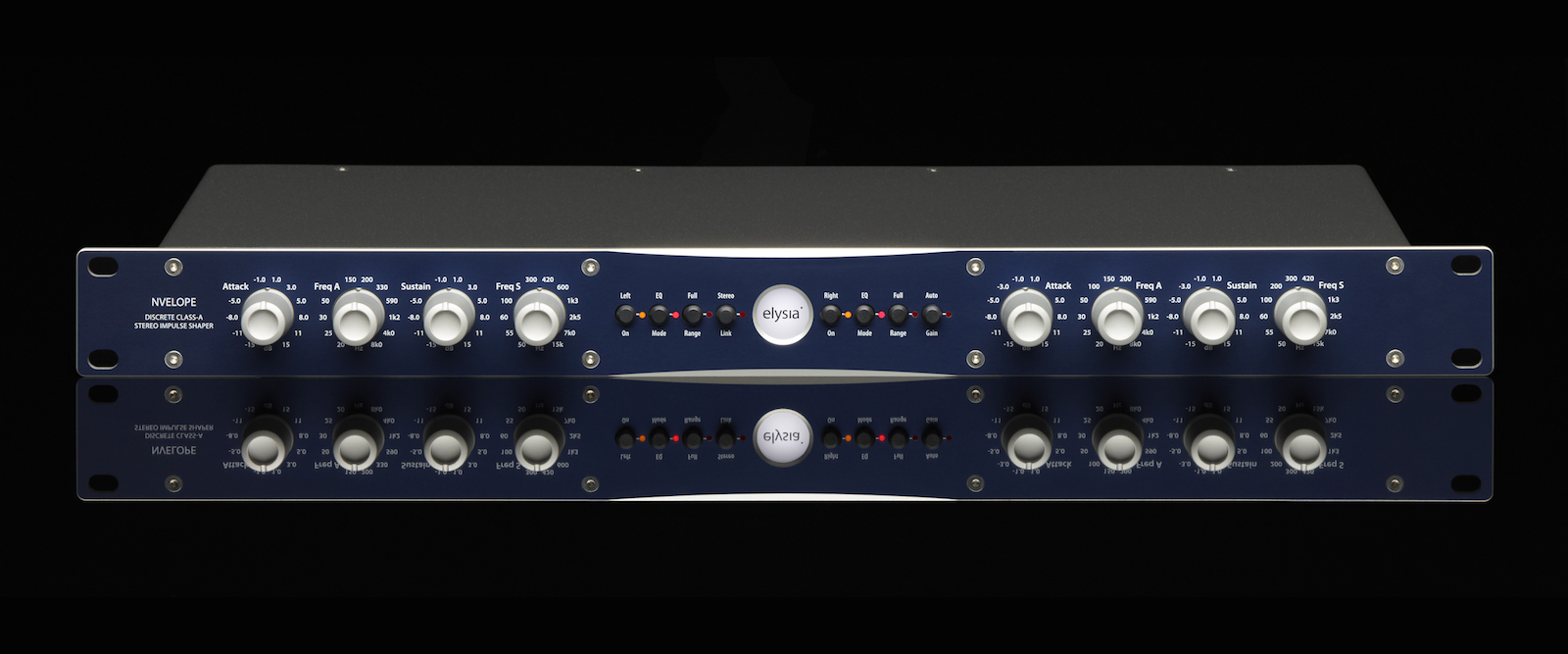
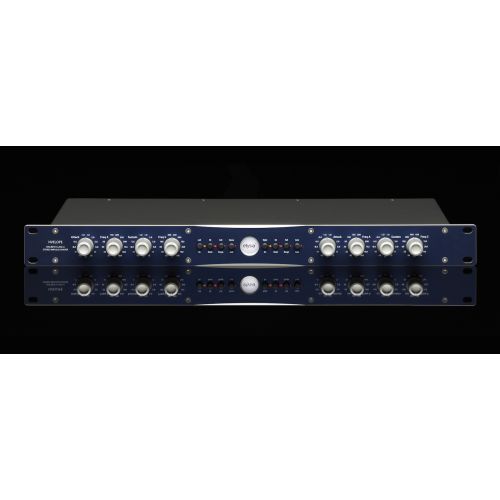
The elysia nvelope has established itself as a unique dynamic processor: whereas a compressor heavily depends on threshold, ratio, and input level, nvelope works directly on the impulsive structure of the signal. Its goal is clear: to give you control over the feel of the hit, the clarity of the attack, and the sustain of the sound, whether on an isolated track or a bus.
Within the range of transient processing tools, its signature lies in two aspects: a discrete Class A analog architecture and especially a Dual Band mode designed for complex sources. The result: you're not limited to "more attack / less sustain" on a snare drum; you can also work on a piano, a pick-played bass, a rhythm guitar, a reverb return, or even a stereo mix with more surgical precision.
nvelope is aimed at sound engineers, producers, and home studio users who want to shape groove and clarity without crushing the musical dynamics. On drums, it can enhance the punch of a kick, bring out the attack of a tom, or conversely tame an overly aggressive hi-hat. On a slapped or pick-played bass, it helps stabilize the perception of the attack and better "lock" the instrument's place in the mix.
It is equally comfortable in mixing as in sound design: reducing sustain to dry out an overly reverberant room, shortening a reverb tail, or giving the impression of a closer, more present instrument. And on a bus, the idea is not to "compress harder," but to position: more attack and less sustain to push forward, or the opposite to pull back and let the mix breathe.
The principle is simple and effective: Attack acts on the initial energy (impact, definition, bite) while Sustain controls the hold, space, and perceived reflections. Reducing sustain makes an instrument drier and shorter; increasing it adds depth, density, and a sense of extended duration, without relying on threshold or release settings typical of compressors.
Dual Band mode is the most distinctive feature: you define the frequency range on which Attack and Sustain will operate. This approach is valuable when broadband correction would be too general (for example, on a stereo bus or a very rich source). You can thus enhance the attack in a useful zone while avoiding over-exciting already busy highs, or control the sustain of a specific band to clean up the image and depth.
By bypassing the dynamic section, nvelope becomes a particularly musical high/low shelf EQ, handy for quickly balancing a signal before (or instead of) transient shaping. It's a direct approach to clarify the low end, open up the highs, or prepare a source before more pronounced processing.
nvelope offers two true channels: stereo linked to preserve the image, or dual mono to process two different sources. And when not linked, the possibilities become very creative: one channel can work in Dual Band while the other remains in Full Range, or you can chain the channels to combine equalization (EQ mode) followed by transient shaping (Dual Band mode) in a second step. This flexibility makes it as relevant in tracking as in advanced mixing.
Add to this an automatic gain that facilitates comparisons and a