30-day satisfaction guarantee or your money back
Call us : +33 257 880 074
 en
en 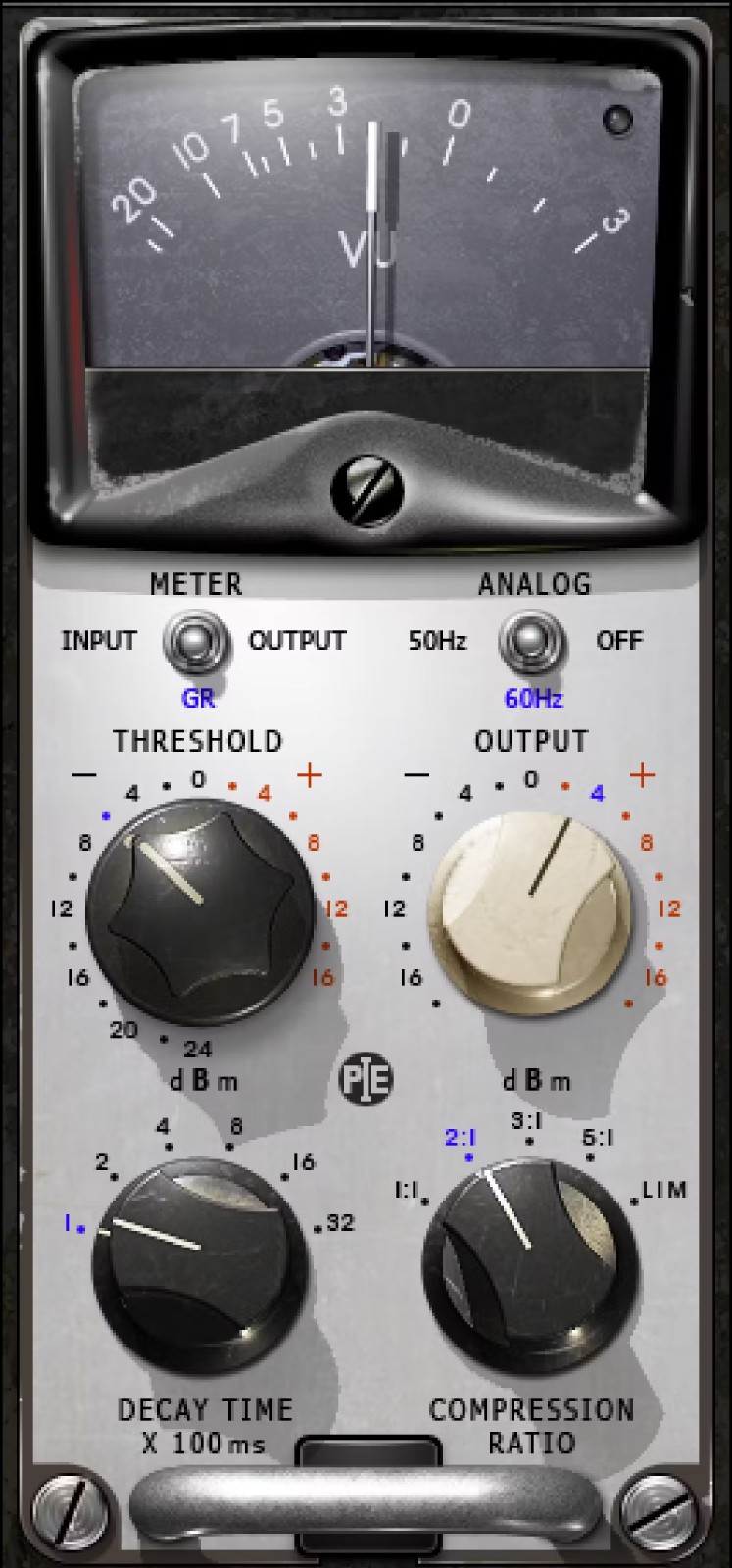
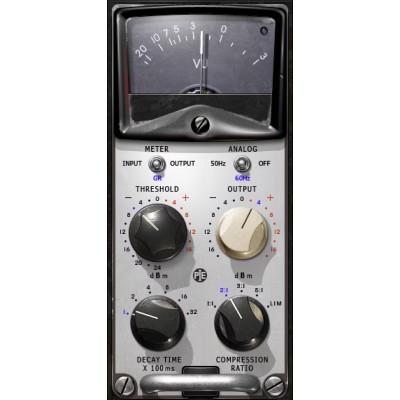
Waves Kramer PIE Compressor is a compression plugin designed to capture the aesthetic of the historic Pye compressor used at Olympic Studios, famous for its ability to "glue" a bus while remaining surprisingly clean. It is especially suited for group compression on drums (room, overheads, drum bus), choirs, or a stereo bus when you want controlled dynamics with bite and a sense of cohesion typical of classic rock productions. Beyond buses, it also performs as a transparent and effective compressor on individual sources like lead vocals or bass, whenever you want to stabilize the level without squashing the attack or losing clarity.
The Kramer PIE relies on the personality of pulse-width modulation (PWM) compression, known for its speed and low distortion. The result: a compression action that can remain very subtle at light gain reduction, while becoming energetic and "bright" when you push the Threshold. This signature makes it ideal for tightening a bus without dulling it, and for preserving definition on drum transients or the presence of a group of voices.
The plugin focuses on efficiency with an intentionally streamlined control section. You choose the behavior via the Ratio (or a Limiting mode), set the Threshold to define the amount of gain reduction, then adjust the Decay to shape the release and the "pumping" sensation (or conversely a more stable hold). This approach favors quick setup, very useful in mixing when you want to find the right impact point in seconds.
On a drum bus, the Kramer PIE excels at densifying the groove: it can bring elements closer, stabilize the snare, and give a sense of power without turning the kit into a crushed block. On choirs, it helps smooth out differences and place the group at the right level in the mix while keeping airiness. On the master or subgroup buses, it adds a musical "glue" effect, especially if you're aiming for a vintage aesthetic rather than surgical compression.
Although its reputation comes from bus use, this compressor can be an excellent choice on individual tracks. On lead vocals, it controls level variations while maintaining a natural feel, especially when you already have EQ in place and want to avoid overly aggressive coloration. On bass, it helps stabilize the foundation and keep the note present in the mix, providing firm but musical control, particularly appreciated in rock and pop arrangements.
The Kramer PIE follows a logic where the attack "just lands" without needing an Attack knob. This speeds up workflow and contributes to the feeling of a compressor that "works immediately," especially on buses. You then focus on essential parameters (threshold, ratio/limiting, decay) and the amount of character desired in the dynamics.
For those wanting to push the hardware illusion, an option allows adding analog noise and hum. This is an aesthetic choice: in very clean modern mixes, you will often leave it disabled, but for vintage-spirited productions, it can enhance the "console + outboard" feel and add a bit more life between notes, especially in quiet passages.
Historically, this type of compression was associated with a console-style processing chain. Used together with a compatible channel strip from the same family, you can recreate a mixing approach where EQ and compression work together to sculpt a retro, edgy, and very musical sound, particularly suited to guitars, drums, and rock vocals.