30-day satisfaction guarantee or your money back
Call us : +33 257 880 074
 en
en 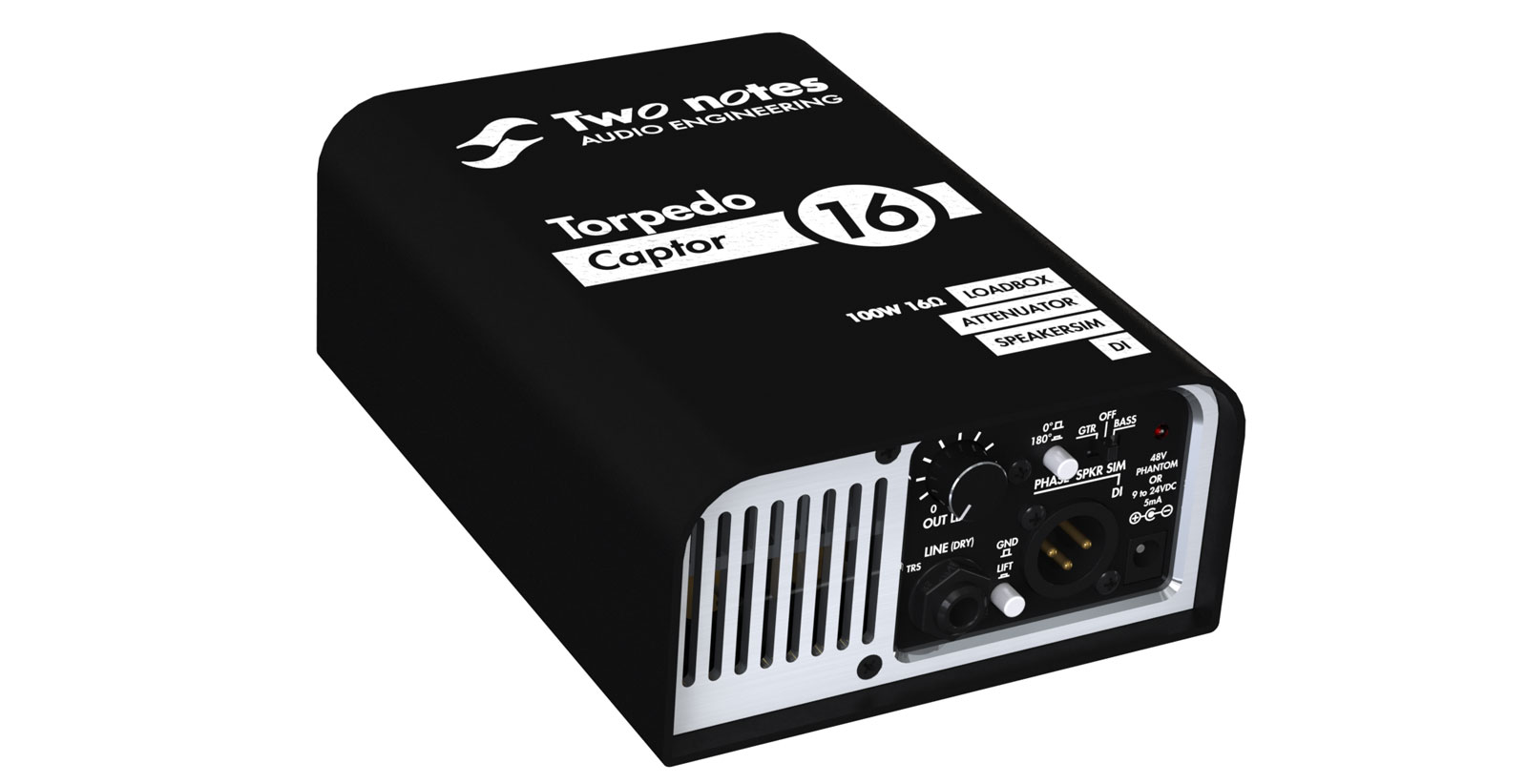
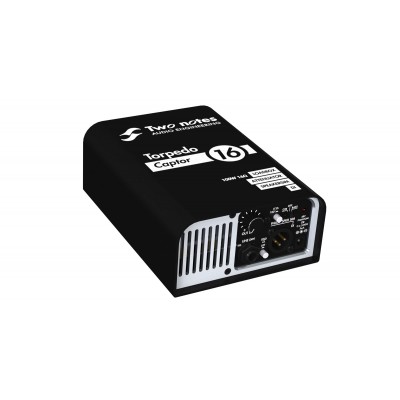
The Torpedo Captor 16 follows the Two notes approach: capturing the character of an amp as you like it (attack, compression, tone) while simplifying recording. Placed between the amp's speaker output and the cabinet, this unit acts both as a reactive load (to preserve the "feel" of a real speaker) and as a direct output tool for recording or sound reinforcement. Its compact DI box format makes it very practical for pedalboards, lightweight racks, or "fly date" setups where every kilo counts.
The Torpedo Captor 16 is aimed at guitarists (and bassists) who want to keep their favorite amp at the core of their sound without relying on a mic in front of a cabinet. At home, it allows you to experience the behavior of a powerful head at a more reasonable level thanks to attenuation. In the studio, it speeds up workflow: a clean DI, controlled level, and consistent cabinet sounds without repositioning a mic. Live, it meets current requirements (quiet stages, in-ear monitors, controlled volume) by sending a usable signal to front of house while retaining the option of a cabinet on stage if needed. Its simple operation suits both musicians discovering "loadbox + cab sim" solutions and pros who want a reliable, quick-to-deploy tool.
Designed to be connected between the amp and the speaker, the Captor 16 offers a THRU speaker output (to send the full amp volume to the cabinet) and an ATT output that applies a -20 dB attenuation to keep a real speaker at a lower volume. For recording and live use, you have an XLR DI output with switchable guitar or bass emulation, designed to provide an immediately musical signal. A line output completes the set, with adjustable level and phase inverter, convenient for integrating the Captor 16 with various mixers, audio interfaces, or monitoring chains. The included Two notes Wall Of Sound III software grants access to 16 virtual cabinets: the idea is simple-you play through your amp, then choose the virtual cabinet character to match your style (clean, crunch, high gain, modern or vintage sounds) without changing your hardware chain.
The strength of a reactive loadbox lies in preserving the playing feel: the response to attack, dynamics, and how the amp "pushes" remain natural, which is essential for edge-of-breakup tones, expressive crunches, and saturations that respond to guitar volume. In direct output, the emulation and integration with Wall Of Sound III provide a credible, mix-ready result: tight lows, clear mids, and better-controlled high-end harshness than a simple raw DI. The result: a more consistent sound from take to take, easier to place in a mix, and above all a reliable way to rediscover your amp in any environment (home studio, rehearsal, TV set, stage with limited volume).



 Certified
 Verified

 Verified
Verified
Verified