30-day satisfaction guarantee or your money back
Call us : +33 257 880 074
 en
en 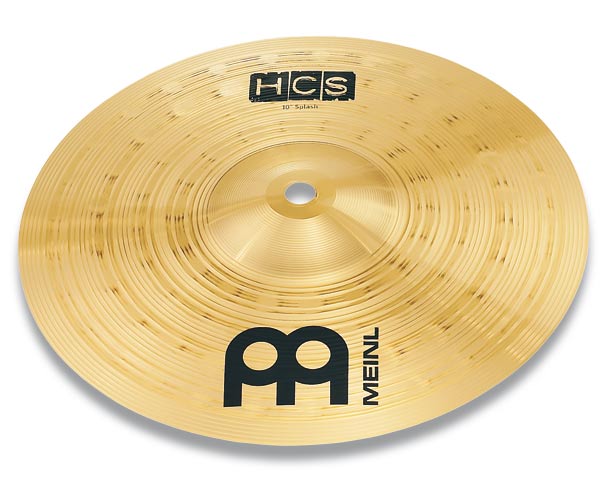
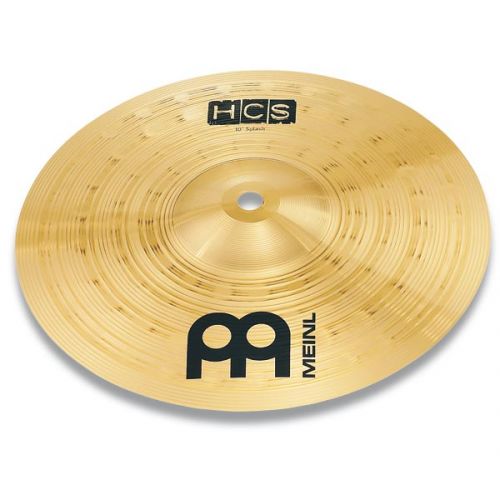
The MEINL HCS series fits within the logic of ranges intended to support the first years of playing, when one is looking for cymbals capable of responding properly to strikes and remaining pleasant to the ear, even during long practice sessions. In the Meinl catalog, the HCS occupy an accessible and educational place: they allow for building a coherent set for rehearsing, playing in lessons, or assembling a first drum kit without breaking the budget.
The MEINL HCS cymbals are particularly suited for beginner drummers and intermediate profiles who want a simple, effective, and consistent series. They are very suitable for learning the fundamentals (power control, metronome consistency, right/left hand dynamics) and for first bands.
In terms of styles, their warm and balanced character makes them comfortable in various contexts: rock, pop, funk, reggae, variety, or contemporary music rehearsals. They also represent a relevant option to equip a classroom, an educational studio, or a second kit dedicated to practice.
The strength of the HCS range lies in a clear approach: offering cymbals in MS63 alloy with a sound output designed to be immediately usable. The result is a relatively forgiving response, which helps achieve a coherent sound even when the striking technique is not yet perfectly stable. This series primarily targets ease of use and musicality, to enjoy the best possible tones within an affordable price range.
In daily use, the HCS facilitate working on essential articulations: stick definition, accent management, and crash placement without excessive aggressiveness. For a first set, it's a reassuring choice: the drummer can focus on groove and precision while benefiting from a homogeneous timbre within the kit.
The MS63 alloy gives MEINL HCS cymbals a generally warm and balanced character. This signature helps achieve a pleasant tonal color for rehearsals and learning, with a clear attack and an overall sound that does not overpower the rest of the drum kit excessively. This is an important point when working on coordination: the cymbal remains present but leaves room for the snare and toms.
In playing, there is an "easy" feel: the cymbal responds without requiring significant force, encouraging a more relaxed and consistent stroke. This warmth also contributes to better tolerance in small spaces (bedroom, rehearsal room, classroom), where a musical and controllable sound is often preferred over extreme projection.



 Certified

 Verified