30-day satisfaction guarantee or your money back
Call us : +33 257 880 074
 en
en 









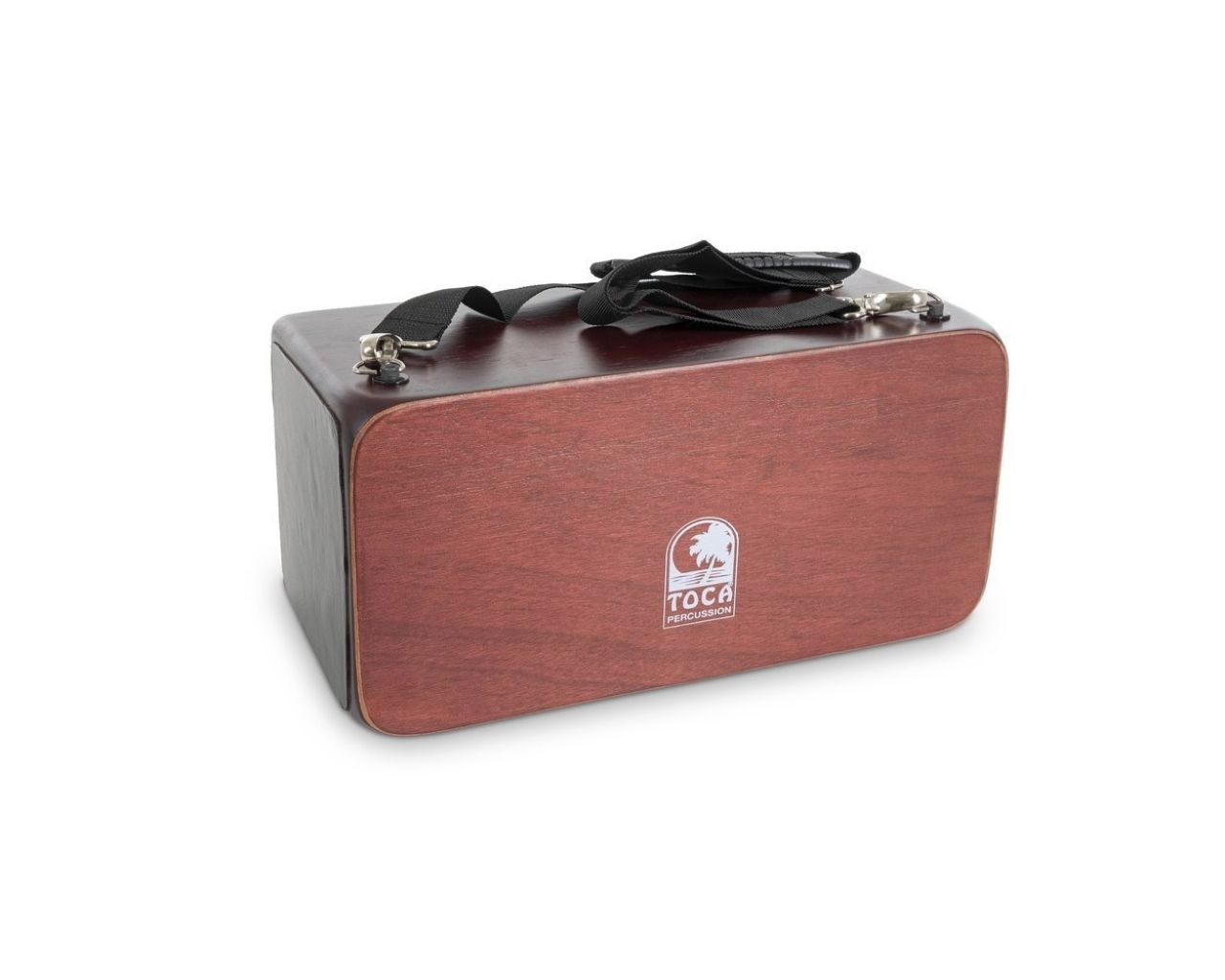


This cajon belongs to the world of modern percussion designed to be compact, expressive, and immediately playable. The "two chambers" approach and the integration of a bass reflex-type principle reflect a clear intention: to offer an instrument with a natural acoustic grain while enhancing register clarity, meeting the expectations of today's cajon players (accompaniment, groove, nuances, live efficiency).
This cajon suits both the beginner looking for an easy-to-understand instrument (bass on one side, highs on the other) and the intermediate musician seeking greater control and definition. The chamber separation facilitates sound placement within an ensemble and helps develop stroke precision.
In terms of styles, it is comfortable in flamenco, acoustic pop, latin, world, light funk, and "singer-songwriter" accompaniment. The strap adds real value for mobile contexts (events, outdoor performances, small stages, moving rehearsals).
The design with two distinct sound chambers structures the cajon as a "bi-zone" instrument: a "Macho" zone oriented towards a higher-pitched sound, with a crisper response, and a "Hembra" zone dedicated to the bass register. This architecture provides an immediate advantage: you get more pronounced contrasts between rim shots (slaps) and center hits (bass), making patterns clearer even at low volume.
The "Hembra" zone incorporates Toca "Bass Reflex" technology, designed to enhance the sensation of more present and "open" bass. In practice, this helps achieve a fuller, more breathing bass, useful in guitar-vocal duos, small ensembles, or when playing without a microphone in a highly absorbent room.
Mahogany is appreciated for its naturally warm character and musical rendering in the low-midrange. On a cajon, this translates into a bass that retains body, with a rounder texture and pleasant harmonics that avoid a too-dry sound. It's a relevant choice for those seeking a full and organic sound with controlled projection.
Thanks to the two chambers, the high register "Macho" can gain definition: attacks stand out more, ghost notes become easier to place, and dynamic variations are more perceptible. On the other side, the "Hembra" part coupled with the Bass Reflex principle enhances the sensation of air moved on center hits, resulting in more generous bass and a groove that "carries" better, particularly useful when accompanying other acoustic instruments.