30-day satisfaction guarantee or your money back
Call us : +33 257 880 074
 en
en 









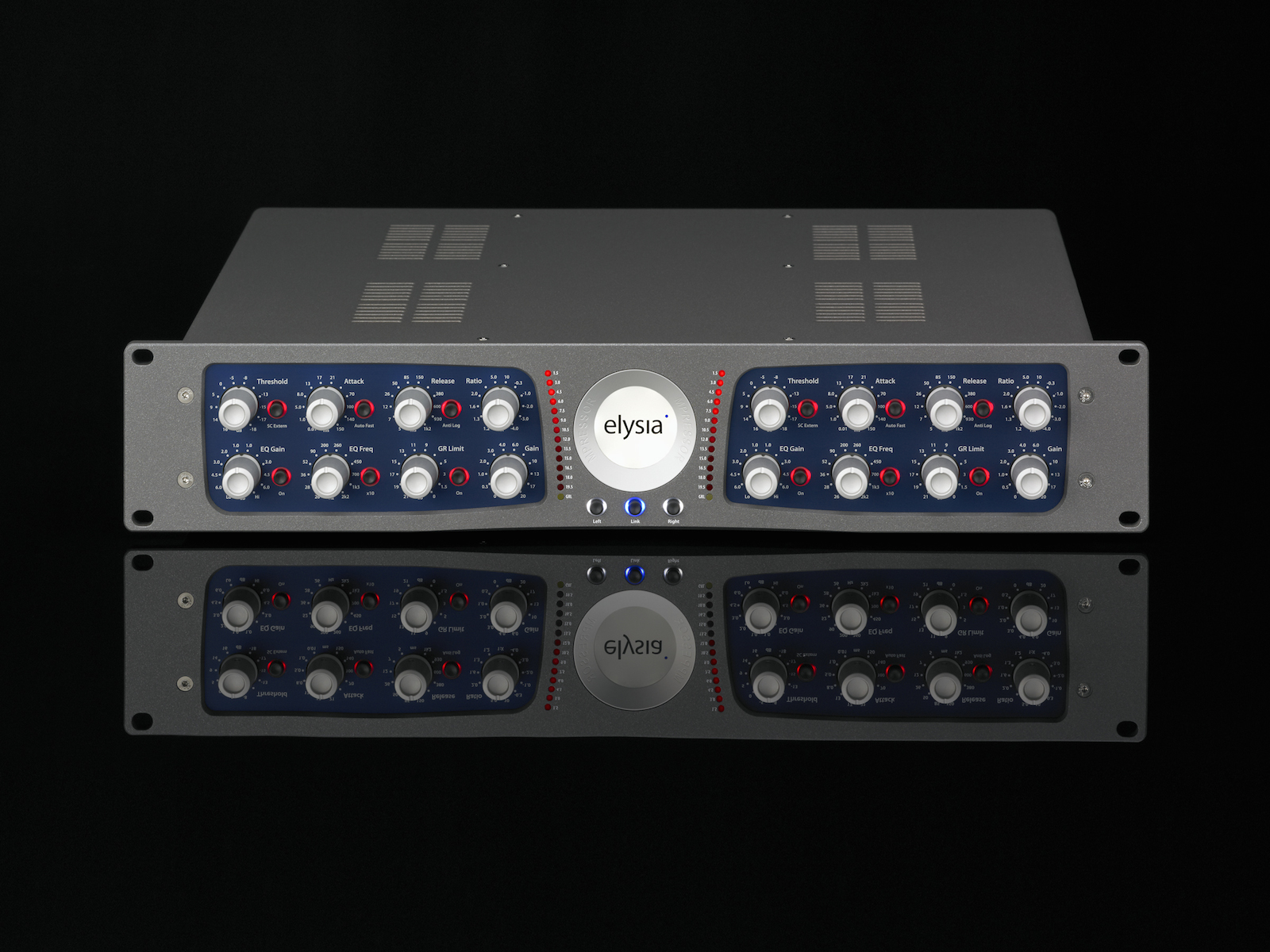


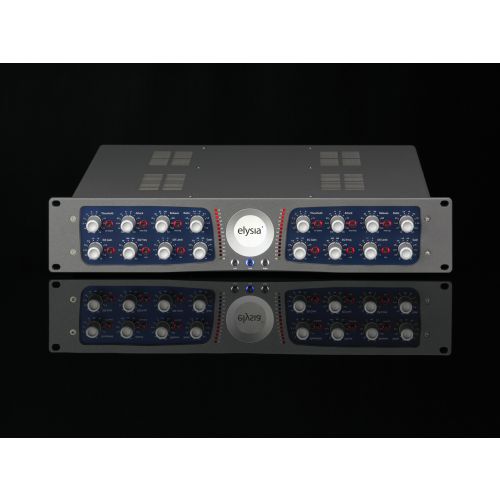
The elysia mpressor was not conceived as just another "studio compressor," but as a creative dynamics tool capable of going beyond traditional uses. Whereas a classic compressor mainly aims to smooth and stabilize, the mpressor emphasizes envelope manipulation, impact sensation, and highlighting rhythmic movement. Within the elysia range, it stands as a bold approach: a machine made for those who want to both shape dynamics and control them.
This analog compressor targets sound engineers, producers, and artists seeking a processor that can be surgical on transients but also expressive when creating a sonic signature. In recording, it provides immediate control over attacks and density, useful on percussive sources, punchy basses, synths, or vocals that need to stay present without losing energy.
In mixing, the mpressor becomes a true staging tool: you can emphasize the "kick" sensation on a snare, make a drum bus breathe, or transform a static element into a living source. It is particularly comfortable whenever you want to create groove and deliberately control movement rather than simply compress "cleanly."
Each channel features a switchable Auto Fast function. The goal is to enable ultra-fast compression while reducing distortion risk during aggressive settings. This is a major asset when you want to catch very short transients, densify an energetic signal, or achieve a sense of "closeness" without crushing the timbre.
The Anti Log circuit is designed to explicitly generate the "pumping" and "breathing" effects often associated with compression. Where these behaviors are sometimes seen as flaws, the mpressor turns them into tools: perfect for making a loop undulate, creating rhythmic breathing, or giving a bus a more "alive" movement.
Thanks to its feed forward design, the mpressor allows for negative ratios. This feature opens the door to extraordinary dynamic behaviors responsible for very pronounced overcompression effects. In practice, this means more options to reshape attack, impact, and density sensation while maintaining a clear reading of the result.
The Tilt EQ allows modification of the signal's timbre across the entire audio spectrum, subtly or pronouncedly. It's an effective approach to compensate for compression that overly emphasizes a spectral area or, conversely, to accentuate intention: more air and presence, or more body and weight, without resorting to complex equalization.
A particularly useful innovation in modern production, the Gain Reduction Limiter lets you set the maximum amount of gain reduction via a simple potentiometer. This way, you can push a setting to gain character and movement while preventing the compressor from going too far. The result: more creativity with immediate and reproducible control.
The switchable external sidechain input greatly expands possibilities. It allows influencing how the compressor reacts, adapting detection to mix needs: a valuable approach when you want to prevent a bass from triggering compression too much or, conversely, make the whole react to a specific control source.
The mpressor's design is based on discrete analog technology with individual components. Audio processing is done with single transistors in Class-A, and the sidechain as well as the power supply use fully discrete circuits. The manufacturer highlights an oversized power transformer, encapsulated conductive plastic potentiometers, temperature stabilizers for critical elements, and amplifiers operating in Current-Feedback mode. This combination aims for high signal quality and a sound that is both clean and powerful, even when exploring the most extreme settings.