30-day satisfaction guarantee or your money back
Call us : +33 257 880 074
 en
en 









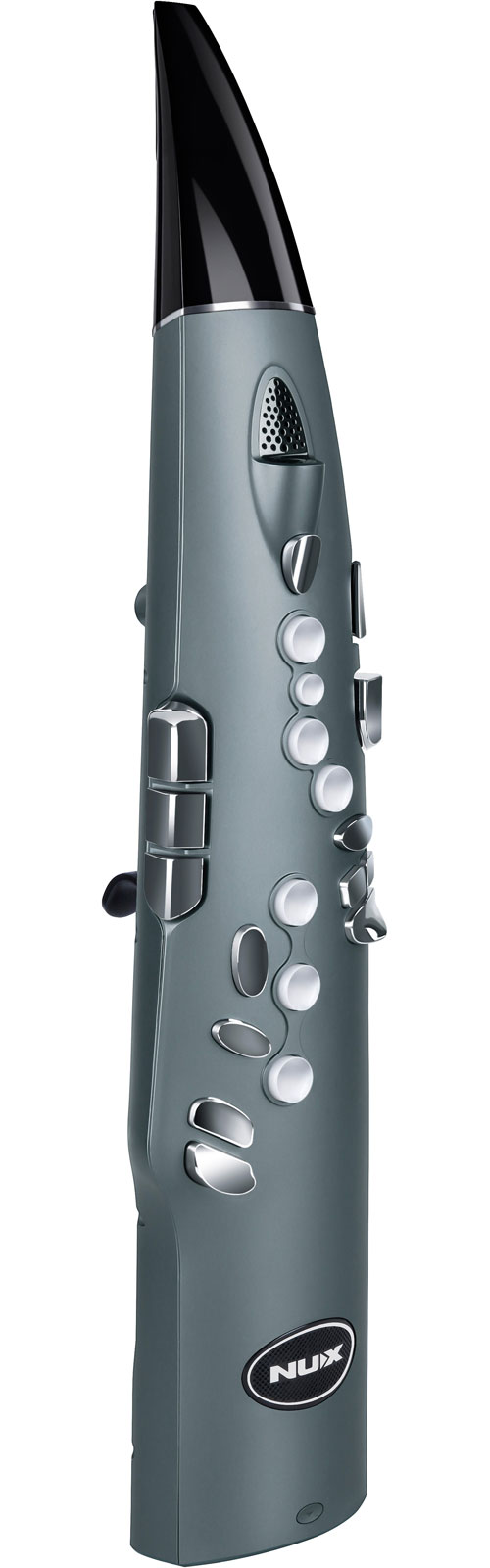


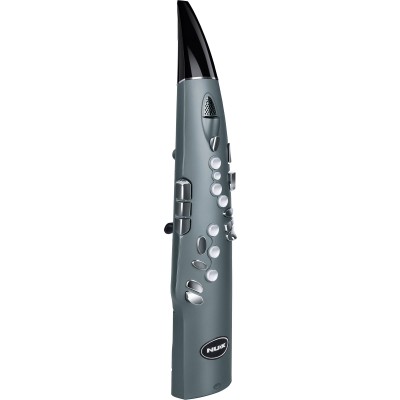
With the NES-1, NUX offers a digital aerophone that stands out with a very "musician-friendly" approach: immediately usable sounds, familiar ergonomics, and control options that prioritize expressiveness. Its positioning is clear: to provide a modern solution for wind instrumentalists who want to play independently, amplify easily, or integrate a MIDI controller into their setup without unnecessary complexity.
The NUX NES-1 is aimed equally at beginners seeking an easy-to-master electronic wind instrument, and at intermediate and advanced players who want to multiply timbres without changing instruments. Thanks to the saxophone fingering (intuitive for many wind players) and the trumpet fingering (ideal for brass), the transition happens naturally depending on your background.
Regarding repertoire, its sound palette and expressive controls make it relevant in pop, variety, funk, electronic, film music, and even for more distinctive colors thanks to traditional Chinese instruments. In the studio, it becomes an inspiring tool for doubling lines, composing quickly, or triggering virtual sounds via MIDI.
The NES-1 focuses on a smooth playing experience: sound emission is controlled by breath, with 8 curves to adjust sensitivity to your attack, power, and comfort. The octave keys (+1, +2, -1) allow quick navigation between registers, exploration of modern phrasing, and natural approach to register variation techniques.
To shape the playing, the "Bite" function (pressure controller) adds real value: it opens the door to expressive inflections (accent, modulation, nuance) close to the feel of acoustic instruments. The configurable pitch wheel complements the set for working on vibratos, slides, and more contemporary effects. Finally, the 5 reverb presets add space to the sound without needing an external processor, while the color LCD screen ensures clear reading of settings.
Designed to play anywhere, the NES-1 integrates two speakers: a 5 W full-range system (2 inches) for bass and mids, complemented by a tweeter (1 inch) for high-frequency definition. The result: a balanced sound for home practice, small group rehearsals, or simply having immediate monitoring without an amp.
Its strong point is also its "modern" connectivity: the 5.8 GHz wireless system allows cable-free playing to an amplified speaker or mixing console, and the receiver stores and recharges directly in a compartment at the base of the instrument. Bluetooth simplifies streaming backing tracks from a mobile device, ideal for working on tempo, intonation, and placement. Finally, via the USB-C port, the NES-1 functions as a MIDI controller (and also allows charging and firmware updates), making it an excellent bridge between wind instruments and DAW environments.
To fully utilize the audio outputs, a 6.35 mm mono jack cable is recommended if you want to connect to an amplified speaker, console, or interface. For silent practice, a wired stereo mini-jack 3.5 mm headset will let you enjoy the sound without disturbing those around you.