30-day satisfaction guarantee or your money back
Call us : +33 257 880 074
 en
en 









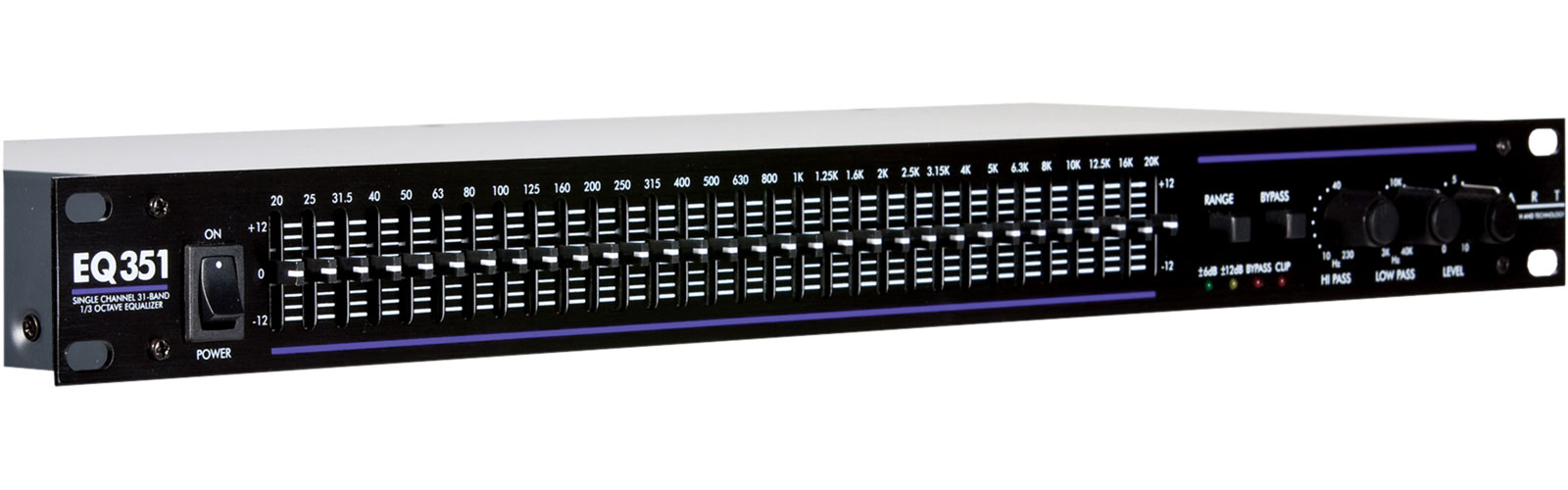


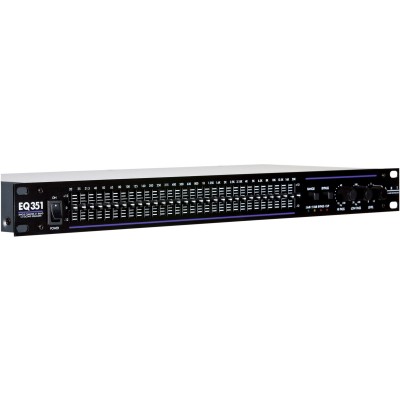
The 31-band graphic equalizer remains a reliable choice whenever quick intervention on the spectral balance of an audio chain is needed: room correction, optimization of a sound system, resonance suppression, or monitoring adjustment. The choice of constant Q factor filtering ensures consistent correction across all bands, helping to work cleanly without unnecessarily distorting adjacent frequency areas.
This 1-channel model is aimed at project studios, control rooms, sound providers, and musicians who want a physical, readable, and immediate equalizer. It is particularly relevant for calibrating a control speaker, refining a monitoring bus, processing a DJ output or a broadcast line, and securing the low end thanks to subsonic filtering. On the front panel, the 31 sliders provide instant visual feedback of the curve, convenient when quick adjustments are needed during rehearsals, in venues, or fixed installations.
With a 1/3 octave distribution, you precisely target problematic frequencies (resonances, harshness, excess bass) while maintaining a very effective "system" approach. The constant Q contributes to more predictable corrections by limiting excessive bandwidth widening when boosting or cutting levels.
Dedicated filters clean up what does not serve the music: very low hums, vibrations, handling noise, or out-of-band energy. The result is a more stable signal, better headroom before saturation, and often a cleaner mix sensation, especially on sound reinforcement systems or near-wall listening setups.
The choice between +/-6 dB and +/-12 dB makes the equalizer versatile: at 6 dB, you perform fine tweaks without overcorrecting; at 12 dB, you have the reserve needed to tame a difficult room or compensate for marked imbalance.
The specified frequency response of 20 Hz to 20 kHz with a tolerance of +/-0.5 dB, a THD of 0.01 percent, and a signal-to-noise ratio of -94 dB place this processor in a transparent processing category. For integration, balanced jack and XLR inputs and outputs facilitate wiring in studios and stage racks, while unbalanced RCA connectors allow simple connection to consumer or semi-pro equipment.