30-day satisfaction guarantee or your money back
Call us : +33 257 880 074
 en
en 









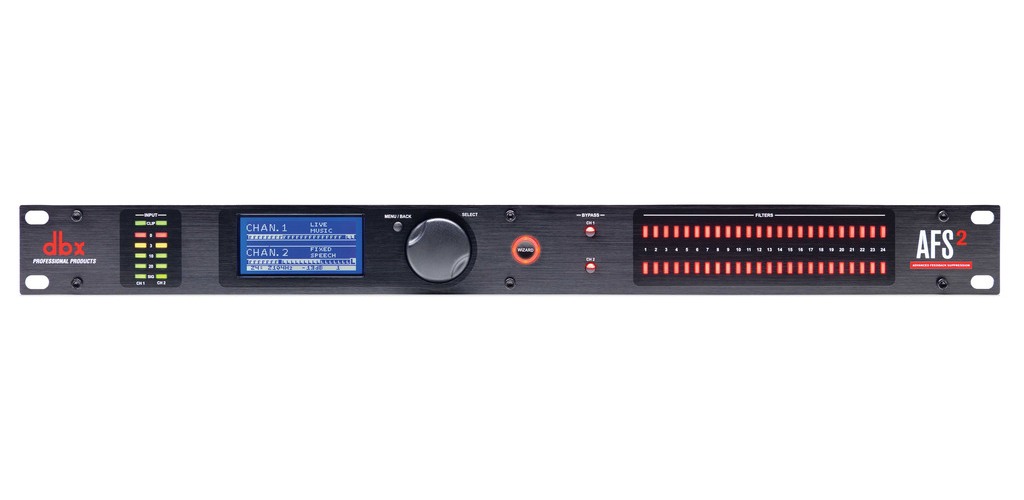


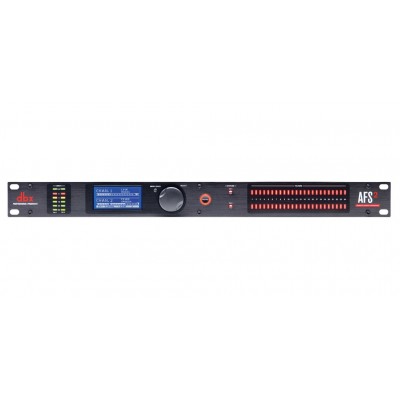
The DBX AFS2 was designed as a direct evolution of the foundations that made the AFS224 successful, pushing further the analysis speed, filter precision, and especially ease of use. While many processors are limited to standard configurations, the AFS2 stands out with a completely revamped Advanced Feedback Suppression module and a modernized interface focused on clear control via the LCD screen.
The AFS2 is aimed at sound engineers, musicians, service providers, and installers who want to secure a system against feedback without spending hours "chasing" frequencies on the equalizer. It is ideal for live use (stage monitors, vocal microphones, conferences) as well as installations (multipurpose rooms, places of worship, schools, meeting rooms), anywhere a reliable, repeatable, and quick-to-implement result is needed.
At the heart of the AFS2 is dedicated processing that goes far beyond common approaches. The processor can deploy up to 24 filters per channel to neutralize resonances and feedback, while preserving the intelligibility and musicality of the signal.
The DBX AFS2 offers 2 modes to suit your workflow. The Fixed mode allows you to prepare the room with presets and memorizable filters, practical for stable installations or setups that need to be recalled quickly. The Direct mode is designed for real-time analysis and processing across the entire frequency spectrum, enabling immediate intervention when conditions change (microphone placement, stage level, audience, etc.).
The AFS2 uses extremely narrow Notch filters, down to 1/80 octave. This precision allows targeting the exact frequency causing feedback without unnecessarily "digging" into the mix. The result: you gain more feedback margin while maintaining a more natural sound, especially on vocals and acoustic sources.
The design is field-oriented: LCD screen for configuration and monitoring, and a dedicated LED chain to visualize the activity of all 24 filters per channel. This readability facilitates diagnosis and allows quick understanding of what the processor is doing, even during a live performance.

 Certified
 Certified