30-day satisfaction guarantee or your money back
Call us : +33 257 880 074
 en
en 









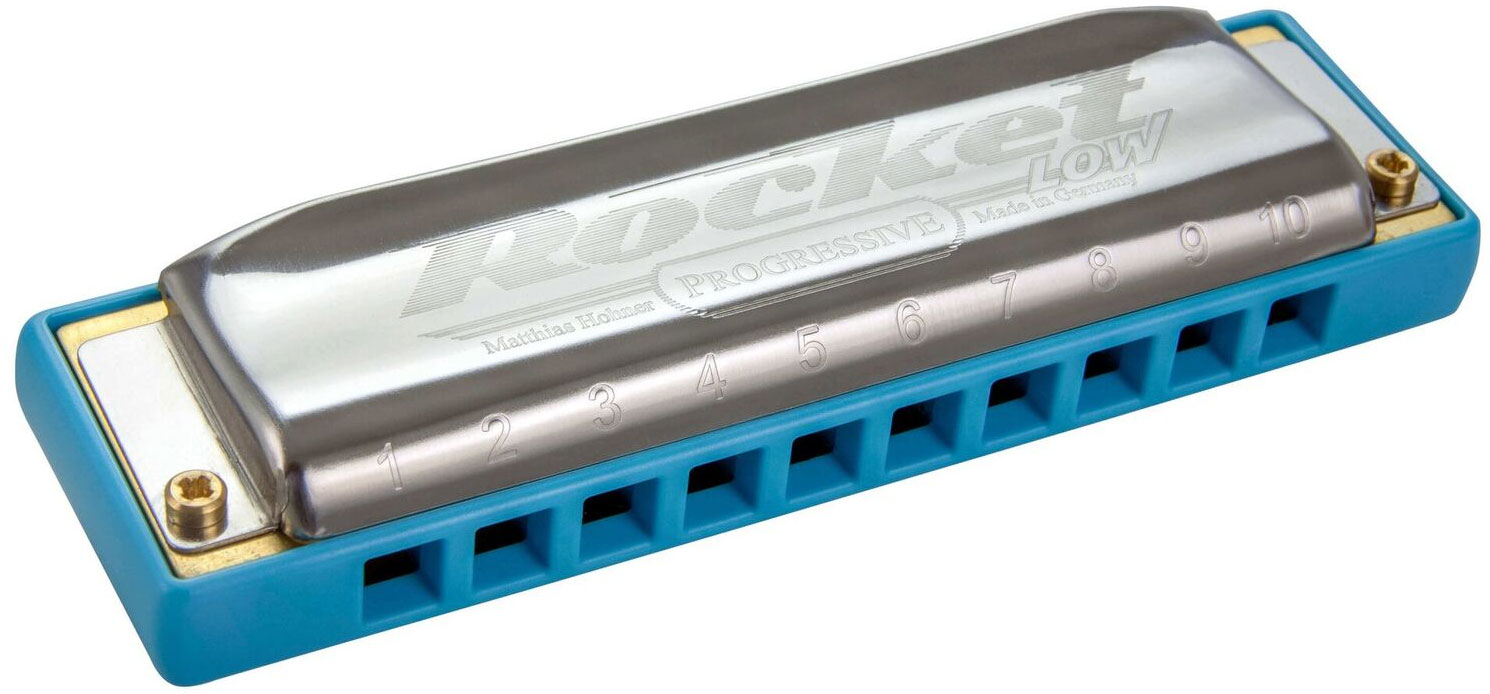


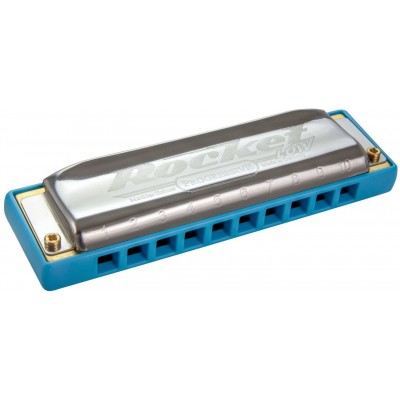
Alongside the more traditional "Richter" diatonic harmonicas, Hohner offers models designed for specific uses and current techniques. The Rocket Low fits this approach: providing a diatonic harmonica focused on power and comfort, while opening the door to low registers. In the spirit of the Progressive range, these instruments target harmonica players seeking a direct response, good sealing, and a reliable format for both stage and studio.
The Hohner Rocket Low is an excellent choice for intermediate to advanced players who want to expand their palette toward lower frequencies without losing the feel of a classic 10-hole. It is particularly suited for blues (its plaintive and expressive sound), but also fits folk, rock, and pop genres whenever a deeper foundation and a marked presence in the mix are desired. Its configuration also promotes endurance playing, with less breath fatigue thanks to improved sealing.
In Richter diatonic tuning, the Rocket Low maintains the chord logic and playing reflexes of a 10-hole harmonica while extending into the low register. The result: a more round and dense timbre, a "body" sensation highly appreciated for riffs and expressive phrases. The 0.9-millimeter brass reeds contribute to a clear attack and good projection, while the very open stainless steel covers allow the sound to breathe for more volume and breadth. The plastic body (blue) provides stability and comfort, and the design with rounded openings aims for better mouth grip, easier sound production, and more consistent response across all holes.
A diatonic harmonica is designed around a given key, with a layout favoring chords and expressive playing (notably bending); it is often the number one choice for blues, folk, or rock. A chromatic harmonica, on the other hand, provides access to all notes via a slide and is more oriented toward jazz, classical, or highly modulating melodies. The Hohner Rocket Low is indeed a diatonic, here in Low C/Do, to enjoy a low register while retaining the traditional "10-hole" approach.
Delivered with a robust neoprene case, it is well protected for transport. For routine maintenance, a soft cloth (to wipe the instrument after playing) is a good complement to limit moisture on the covers and around the reeds.