30-day satisfaction guarantee or your money back
Call us : +33 257 880 074
 en
en 









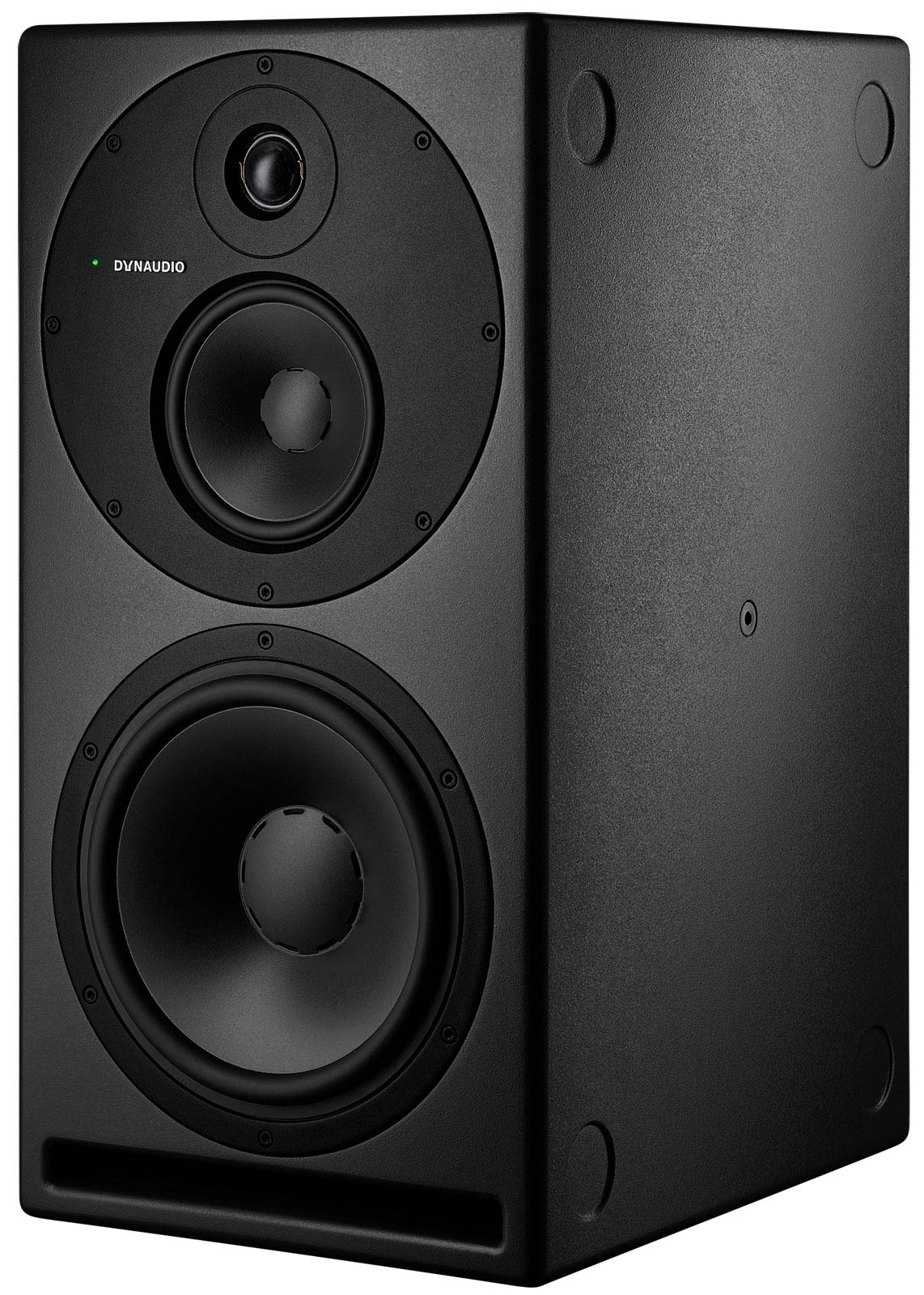


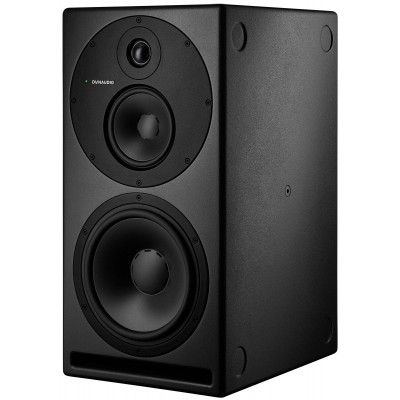
The Dynaudio Core 59 stands as the flagship model of the Core series, a line of high-end reference monitors developed to meet the demands of modern professional studios. It embodies the brand's DNA: a very "source-truth" approach, mastery of dispersion, and an absolute priority on temporal coherence across frequency ranges. With its 3-way architecture and front-ported bass reflex enclosure, the Core 59 clearly targets control rooms where quick and reproducible decisions must be made day after day on dense mixes and very diverse content.
This philosophy is also reflected in design choices focused on pure performance: heavily reinforced cabinet, thick front baffle (super-inert 32 mm), and individual calibration. The goal is not to embellish but to provide a reliable reading of the low end, midrange (critical area for vocals, guitars, snare drum), and high frequencies, to minimize "surprises" when translating mixes on other systems.
The Core 59 is primarily aimed at sound engineers, mixers, producers, and sound designers who need monitoring capable of maintaining a high level without compression, while remaining usable at moderate volume. Its high maximum acoustic pressure and bass response make it an excellent choice for demanding environments: mixing control rooms, editing rooms, sound editing, post-production, and creative studios where fine decision-making alternates with realistic level checks.
Thanks to its analog and digital inputs (including AES3) and compatibility up to 24-bit / 192 kHz depending on the input signal, it easily integrates into a modern workflow: audio interface, monitor controller, external converters, digital audio workstations, and post-production chains. If you are looking for a 3-way active studio monitor capable of combining precision, power handling, and coherence, the Core 59 was designed for this specification.
The 3-way format of the Core 59 is not about "doing more," but doing better: the woofer handles the foundation and impact, the midrange driver focuses on clarity (attack, articulation, presence), and the tweeter takes care of detail and air. This distribution reduces the strain on each driver within its comfort zone, helping to maintain a stable signature as the mix thickens and better distinguish micro-variations in EQ, compression, and reverb.
Each driver has its own Class D amplifier, with rated power of 500 W for the woofer, 500 W for the midrange, and 150 W for the tweeter. This topology, combined with Pascal Class D amplifiers, provides a significant reserve: the low end remains controlled, the midrange does not harden when pushing levels, and the high frequencies retain their finesse. In practice, this helps to work longer with less fatigue while maintaining a solid reference point for judging balance and punch.
In the studio, an excellent speaker alone is not enough: placement, room acoustics, and distance to walls strongly influence the sound. The Core 59's DSP is designed to optimize performance according to positioning, tonal balance, and bass extension, to achieve a more controlled response in real conditions. The idea is to preserve the "reference monitor" character while making the speaker more adaptable to control room constraints (wall distance, height, expanded nearfield listening).
The Core 59 features an Esotar Pro tweeter, redesigned for high-performance professional use. It aims for detailed but controlled reproduction, useful for judging sibilance, fine transients (cymbals, finger noise, synth attacks), and energy in the upper spectrum without tipping into artificial brightness. The result: more reliable equalization and de-essing decisions, and a stereo image that remains clear when arrangements become complex.