30-day satisfaction guarantee or your money back
Call us : +33 257 880 074
 en
en 









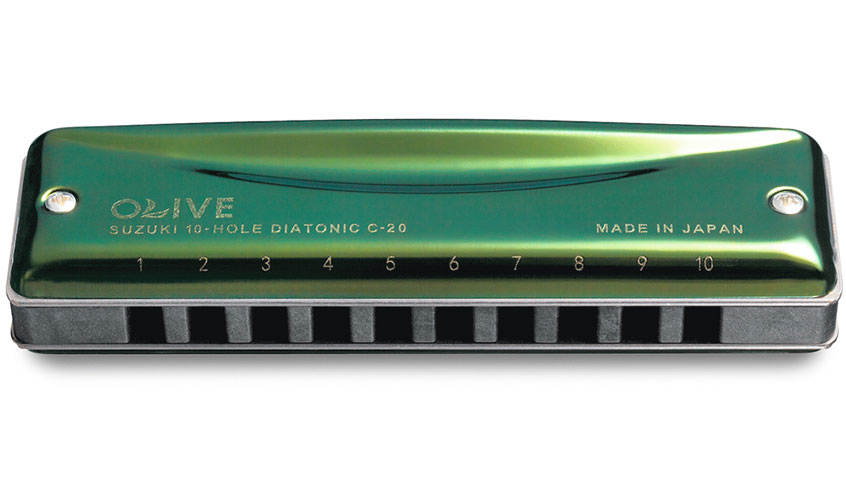


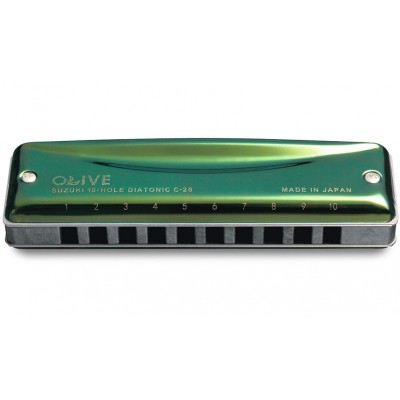
In the world of harmonicas, the diatonic in C is often considered the reference key: it is frequently found in methods, exercises, and a large part of accessible repertoires. This "Olive C" model fits into this tradition by offering both a practical and aesthetic approach, with a choice of materials and a visual finish more pronounced than on a standard diatonic harmonica.
Thanks to its key of C, this harmonica is particularly suited for beginners who want to learn on a common key, as well as intermediate musicians looking for a diatonic in C with a distinctive design. It is well suited for styles where the diatonic harmonica reigns: blues, folk, country, pop, and acoustic accompaniment. It can also be used to work on intonation, articulation, and effects (attacks, dynamics), keeping in mind that the diatonic favors a "key-by-key" approach.
The hybrid wood-resin body aims to offer a pleasant feel in the hand and to the touch, while seeking good stability against usage constraints (breathing, humidity, transport). On a harmonica, the body (often called the comb ) plays an important role in comfort, airtightness, and response consistency: a good mouth grip and stable hold facilitate note production, especially during long sessions. Aesthetically, the olive green iridescent chrome covers provide a strong visual signature, with a glossy finish that catches the light without losing subtlety.
A diatonic harmonica is designed around a major scale in a given key (here C ): it is ideal for blues, folk, and all the typical "expressive" playing styles of the diatonic. Conversely, a chromatic harmonica gives access to all notes (often via a slide button ), making it very versatile in jazz or classical music, but with a different approach and feel. The "Olive C" model is indeed a diatonic, designed to play naturally in the key of C and explore the techniques specific to this family of instruments.