30-day satisfaction guarantee or your money back
Call us : +33 257 880 074
 en
en 









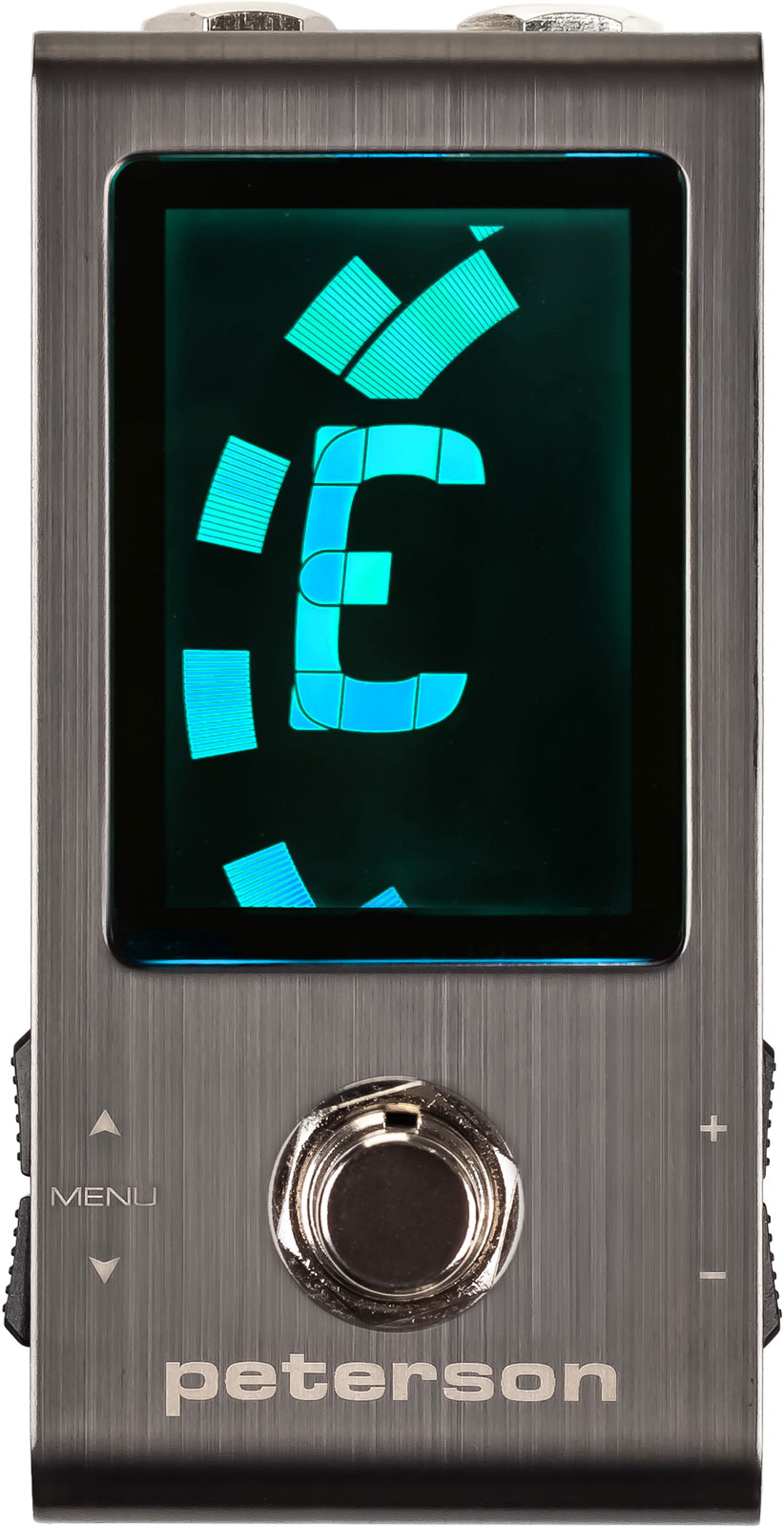


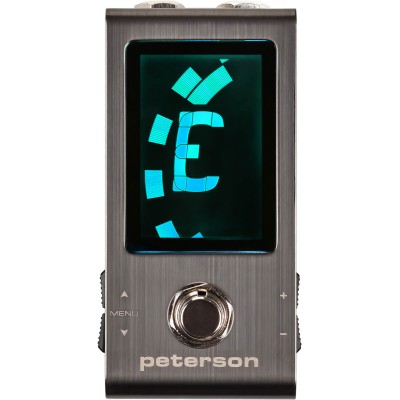
Peterson is a benchmark when it comes to stroboscopic tuning, a display type renowned for its reading precision and ability to reveal micro-deviations that a standard tuner might smooth over. The StroboStomp Mini captures the spirit and key functions of a high-end stage tuner but in a reduced format, designed for compact pedalboards and setups where every centimeter counts.
The StroboStomp Mini is aimed both at beginner guitarists who want a solid foundation (intonation, bridge adjustment, string gauge changes) and seasoned musicians demanding uncompromising readings live and in the studio. It is particularly relevant for styles where the ear quickly detects beats and relative tuning (blues, rock, country, jazz, worship), as well as for modern contexts (drop tunings, open tunings, capo use, baritone guitars, bass).
Thanks to its "Always On" mode, you can keep an eye on tuning stability without necessarily muting the signal, useful for checking tuning accuracy between chords, on fretless instruments, or during soundchecks.
Designed to integrate cleanly into an effects chain, the StroboStomp Mini offers several output behaviors to adapt the tuner to your pedalboard philosophy: true bypass to maintain a direct signal path, or buffer mode to secure transmission over long cable runs and pedal-heavy chains. All with switching designed for stage use, and a mute output for silent tuning.
Regarding tuning, you have a wide selection of sweeteners (optimized tunings) and practical tools: adjustable A reference from 390 Hz to 490 Hz and transposition from +5 to -6 semitones, perfect for switching from a standard guitar to another tuned lower, or to align with a piano/brass section that does not play on a strict A440. The firmware is updatable and the pedal is compatible with Peterson Connect for fine-tuning configuration and tracking updates.
A tuner does not "color" your sound by design, but its integration in the chain can influence the playing feel. Here, the choice between true bypass and buffer allows precise control over this aspect: in true bypass, you keep a direct path when the tuner is off; in buffer mode, you stabilize the treble and attack when the chain lengthens (multiple pedals, long cables), often resulting in a firmer and more consistent feel. On stage, it is also a trusted ally: guitarists like Steve Stevens and Andy Wood have incorporated it into their setups, proof of a clearly "pro" orientation in usage.