30-day satisfaction guarantee or your money back
Call us : +33 257 880 074
 en
en 









Complete software

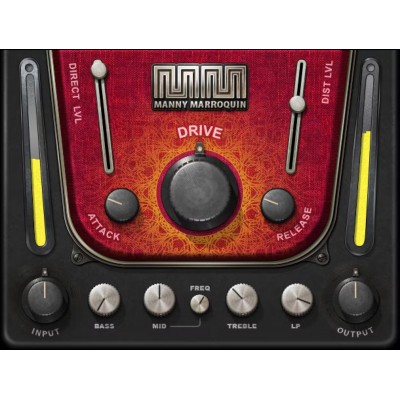
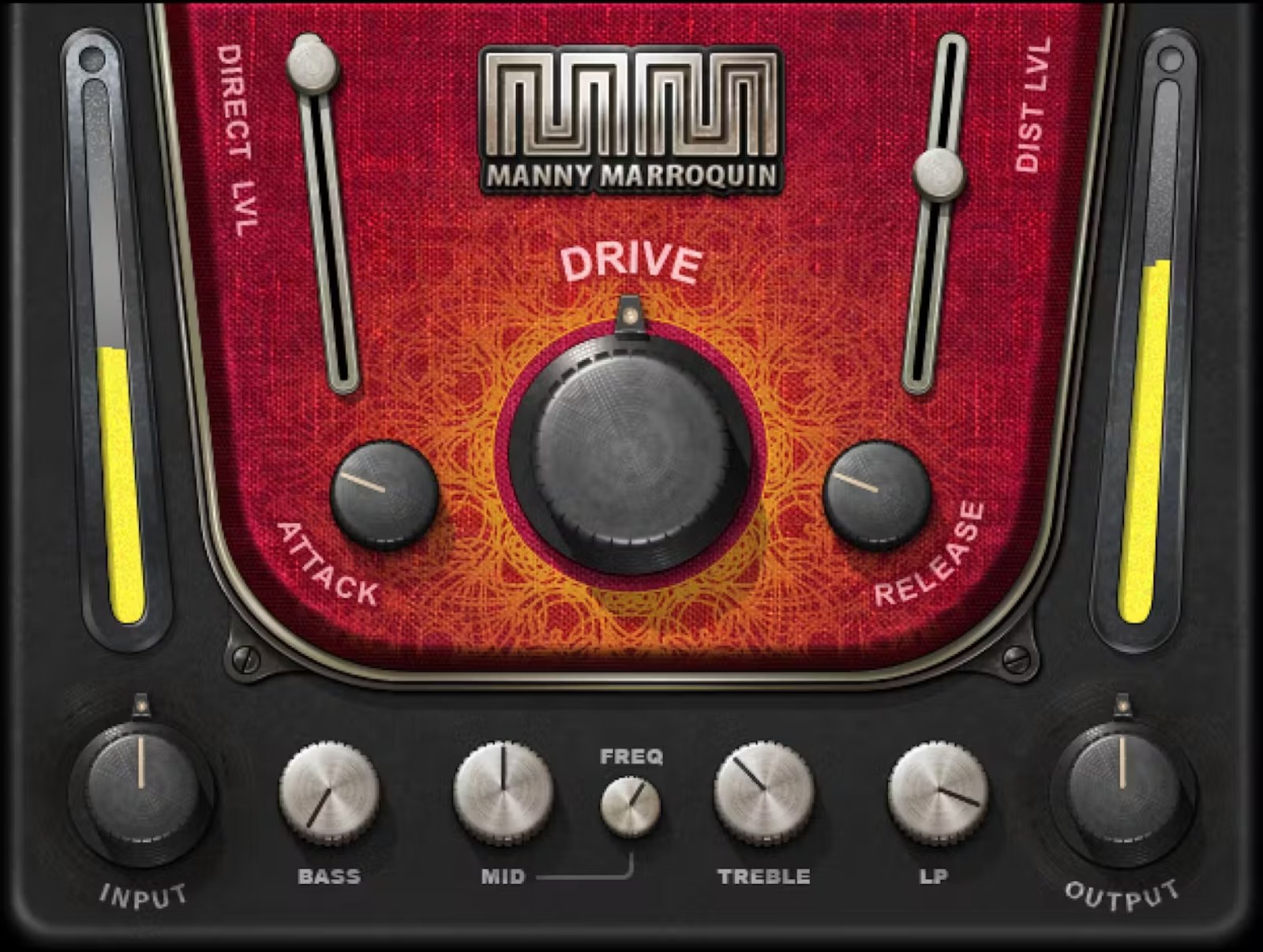
Waves Manny Marroquin Distortion is a distortion/saturation plug-in designed for modern mixing: it allows adding density, bite, and a sense of energy while preserving the clarity of the original signal thanks to a parallel processing approach. Whereas some distortions "crush" and homogenize, this one aims for a more musical texture, capable of being felt even when subtle.
It is particularly effective for de-sterilizing digital synths, giving more authority to a bass (DI or amp), enhancing the impact of drums (kick, snare, room), or adding extra presence to vocals without resorting to simple aggressive clipping. It is also an excellent choice when a sound is "too clean" and lacks life, roughness, or definition in a dense arrangement.
The principle of parallel distortion is to layer a saturated track over the original signal to gain thickness and perception while preserving attack, definition, and overall dynamics. On synths, this helps them cut through the mix without increasing volume. On bass, it improves playback on small speakers by adding useful harmonics. On drums, it enhances the sense of power and proximity.
Even before saturation, a pre-distortion compressor shapes the dynamics feeding the distortion stage. In practice, this is an essential lever: well-measured compression makes the distortion more consistent and more "mix-ready," while freer dynamics can produce more expressive saturation that reacts to playing variations. On vocals, subtle settings can add punch and presence, sometimes more musically than a limiter.
One of Manny Marroquin Distortion's strengths is its 4-band EQ placed before distortion. This setup is strategic: by boosting (or controlling) certain frequency areas before saturating, you precisely decide which frequencies will generate the most harmonics. The result: you can thicken a low-midrange, highlight an attack, or conversely avoid making an already busy area muddy after saturation.
The Attack and Release parameters determine how the distortion sets in and how it fades. Attack helps you choose whether saturation appears immediately (a more direct, aggressive effect) or develops more gradually (a softer, more "glued" effect). Release influences sustain: depending on the setting, distortion can fade quickly or remain present on note endings, which is very useful on sustained basses, pads, or guitars.
On single-coil guitars, the plug-in can add body and make the sound less thin, more assertive, without necessarily changing the instrument's identity. On bass, it adds grain and clarity. On synths, it breaks the overly clinical aspect and helps integration in a busy mix. On drums, it "beefs up" elements for a bigger, more powerful feel, particularly effective on drum buses or room tracks.