30-day satisfaction guarantee or your money back
Call us : +33 257 880 074
 en
en 









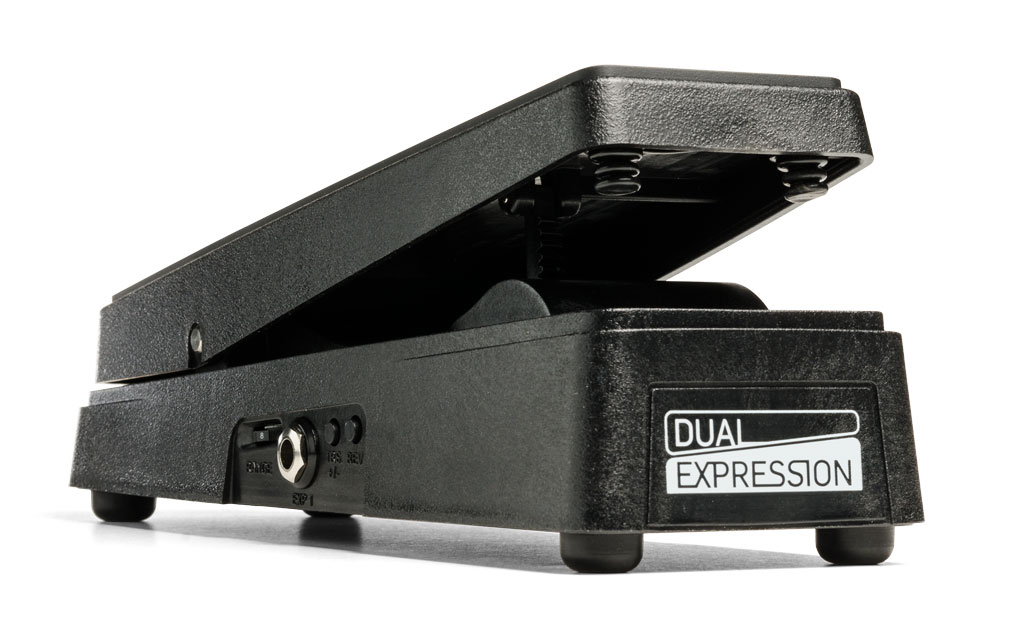


The Electro-Harmonix Dual Expression Pedal follows the great tradition of foot controllers that transform a simple adjustment into a musical gesture. Where a "classic" expression pedal often limits itself to a single output and some wiring compromises, EHX opts here for a decidedly practical approach: two EXP outputs, each independently adjustable, to easily integrate modern setups (multiple pedals, multi-effects, or two parameters of the same device if supported).
Its strength lies in its fine adaptability: the Range, Direction (reverse), and Polarity options allow for a natural behavior with a wide range of gear, even when wiring standards differ between brands.
This expression pedal is aimed at any guitarist, bassist, or keyboardist who wants to take back control of parameters in real time without letting go of their instrument. It suits beginners (easy to integrate, no menus) as well as advanced musicians building a complex pedalboard who want a clean and reliable solution.
In practice, it excels at controlling a wide variety of uses: volume (depending on the device), wah controlled by expression, morphing between two settings, mixing delay or reverb, modulation speed, depth, mix, feedback, or filter sweep. Live, it's an obvious asset for breathing life into a solo or evolving an ambient texture. In the studio, it allows recording natural, more organic movements than mouse-drawn automation.
The Dual Expression Pedal stands out with its dual EXP output and especially because each output has its own settings. Practically, you can assign one output to effect A (for example, chorus depth) and the other to effect B (for example, reverb mix), while separately adjusting the feel and control range of each.
The Range settings define the portion of travel actually used: very useful to avoid overly sensitive zones, limit an excessively high max value, or conversely exploit the full available range. The Direction (reverse) setting reverses the variation direction to achieve logical behavior depending on the gear: heel back for "less," toe forward for "more," or the opposite if the device requires it. Finally, the presence of a polarity switch on each output significantly improves compatibility: you are not limited to a single standard, and you can even control two different devices requiring different polarities.
Another advantage: no power supply is needed, simplifying wiring and freeing up your pedalboard power supply outputs. Plug in, calibrate the travel if needed via Range, choose the appropriate polarity, and play.
An expression pedal is not intended to color the sound: here, "musicality" is measured by the smoothness and precision of control. The Dual Expression Pedal allows smooth transitions, gradual rises, and perfectly dosed changes, which directly translate into a more expressive rendering on your effects. The Range settings also help find a balance point: for example, a reverb that opens without drowning the attack, or delay feedback that climbs to self-oscillation only at the end of travel, remaining manageable in live contexts.