30-day satisfaction guarantee or your money back
Call us : +33 257 880 074
 en
en 









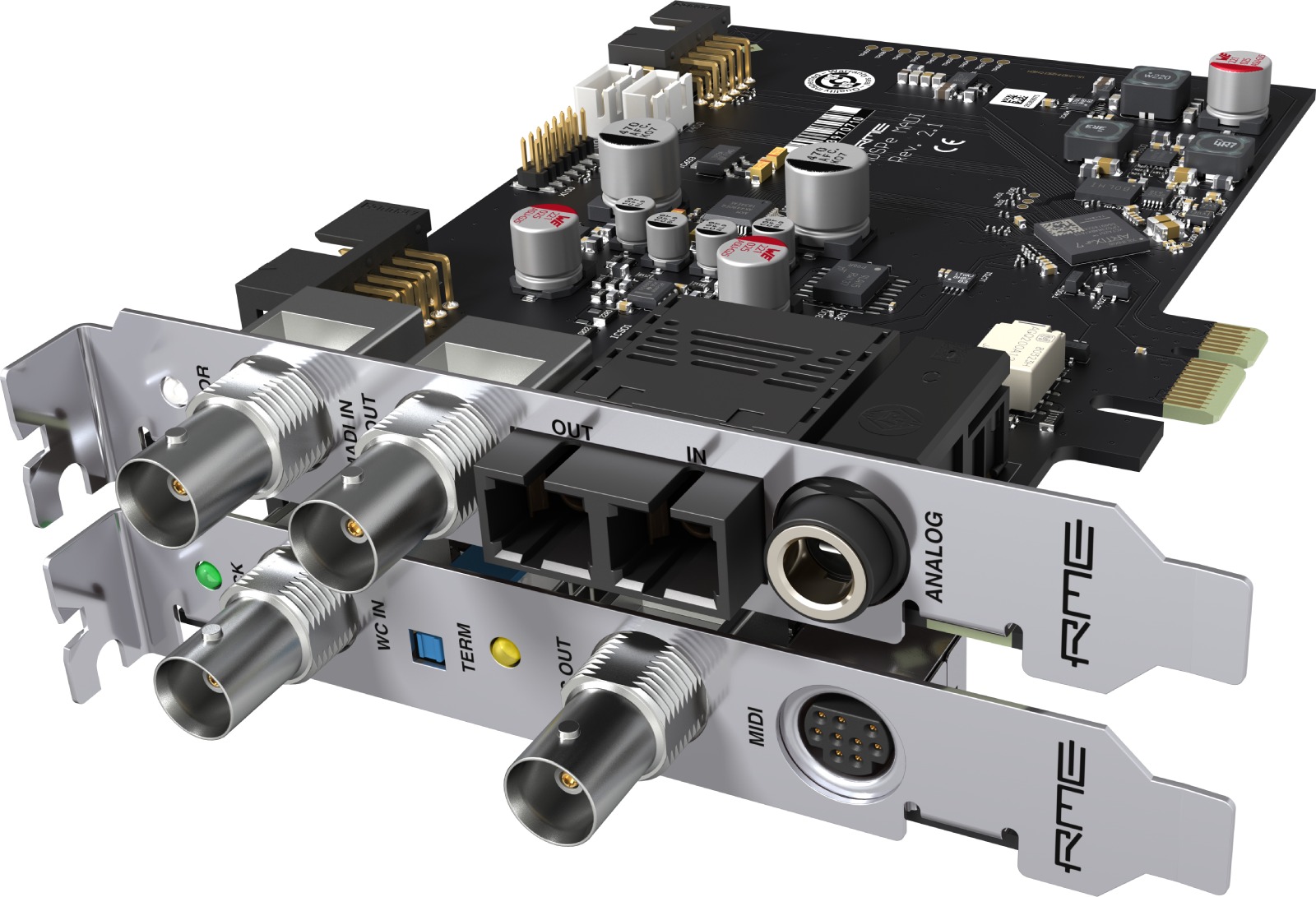


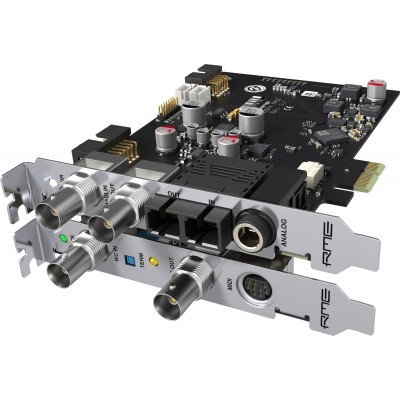
Iconic of RME's very high-performance MADI solutions, the HDSPe MADI FX belongs to a range designed for studios, OB vans, theaters, and installations where stability, synchronization, and I/O density are paramount. This version stands out from previous MADI cards thanks to the Hammerfall Pro Audio Core, a modular architecture developed to handle a massive volume of channels while preserving RME's DNA: efficiency, reliability, and minimal latency.
This PCI Express card is aimed at sound engineers and integrators who need to centralize large audio streams in MADI, control multiple converters, and distribute return mixes without compromise. It is suitable for both multitrack recording and mixing in hybrid environments, with a key advantage: powerful stereo monitoring and internal routing capabilities sufficient to replace many hardware patch bays.
To maintain high performance despite the channel count, RME introduces a processing core capable of handling three times more channels than previous MADI generations, while reducing CPU load. The result: exemplary responsiveness, with buffer settings that can go as low as 32 samples on modern setups.
TotalMix FX transforms the HDSPe MADI FX into a complete routing matrix: creation of submixes, headphone distributions, DSP processing, and fine management of inputs/outputs. All this relies on a 42-bit internal signal router, designed to preserve precision during summations and complex routings.
With SteadyClock, Word Clock, and analysis tools, the card is built for long digital chains and multi-converter systems, securing the clock and facilitating diagnostics of levels and signal quality.