30-day satisfaction guarantee or your money back
Call us : +33 257 880 074
 en
en 









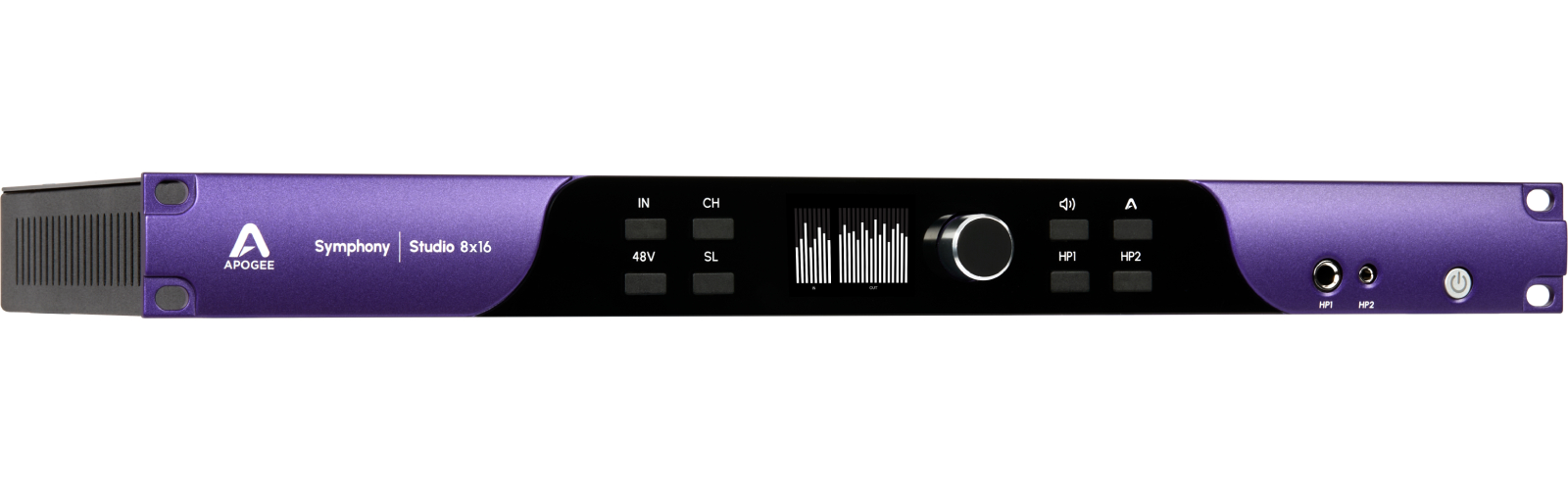


Designed to meet current workflows, this USB-C audio interface stands out with a "full studio" approach: it combines numerous mic/line inputs, a DSP processing section per channel, and above all an output architecture designed for multichannel configurations. While many interfaces limit themselves to stereo or light surround monitoring, its Atmos 9.1.6 orientation and monitor control functions make it a natural tool for post-production control rooms, scoring studios, and immersive mixing rooms.
This interface is aimed at sound engineers and producers who want to centralize capture, processing during tracking, and monitoring management in a single device. The 8 microphone/line inputs are perfectly suited for recording vocals, close-miked drums, guitars (microphones and DI depending on your chain), small ensembles, or for creating stems in the studio.
On the monitoring side, the 16 line outputs allow powering a complete immersive speaker system while maintaining a calibration and configuration recall logic. The 2 independent headphone outputs facilitate sessions with two people (producer + performer, or two musicians) with separate mixes, without latency thanks to direct monitoring.
With gain reaching 75 dB, the preamplifiers handle situations where input levels are low (soft vocals, distant miking, low-sensitivity dynamic microphones). The goal is twofold: to preserve headroom and avoid "pushing" the gain to the point of degrading the signal. The stated performance with an equivalent input noise greater than 127 dB supports clean capture, suitable for critical takes.
Each input benefits from a DSP channel strip with high-pass filter, 3-band EQ, and compressor. This allows shaping a vocal during recording (cleaning lows, enhancing presence, controlling peaks), stabilizing a bass, or securing a dynamic take, while maintaining a smooth workflow. Practically, you can offer artists a more inspiring monitor mix while keeping a clean, reproducible production logic.
For mixing, the DSP calibration section includes EQ, delay, and bass management. The purpose is to time-align speakers, optimize spectral balance, and control translation between systems, which is crucial in multichannel and immersive setups. The Control 2 software complements this feature: up to 8 monitor configurations can be saved to quickly recall different calibrations (listening positions, speaker sets, level or routing variations).
Direct monitoring facilitates recording without latency sensation, particularly appreciated on vocals and rhythmic instruments. The 2 independent zero-ohm headphone outputs are designed to maintain a stable response with a wide variety of headphones and to manage two separate headphone mixes. The line outputs are switchable between +4 dBu and -10 dBV, simplifying integration with both professional studio gear and some consumer-oriented equipment.