30-day satisfaction guarantee or your money back
Call us : +33 257 880 074
 en
en 











At JHS, fuzz pedals have been part of our lineup for over a decade. We have designed original circuits, reproduced classics, and witnessed the trend of fuzz popularity come and go. The "Legends Of Fuzz" series is our tribute to the most important fuzz circuits ever made. It's our way of ensuring that the history of these effects lives on in the music you will create. From the early days of fuzz in the mid-60s London scene to the ex-Soviet military factories of the 1990s that revived the Big Muff, fuzz tells a story, and that story includes guitarists like you. There is nothing more primal than plugging your guitar into a vintage fuzz circuit; it’s raw, untamed, and so pure that it pushes the limits of what your instrument can achieve. Plug in a fuzz and connect to sixty years of beautifully broken sound.
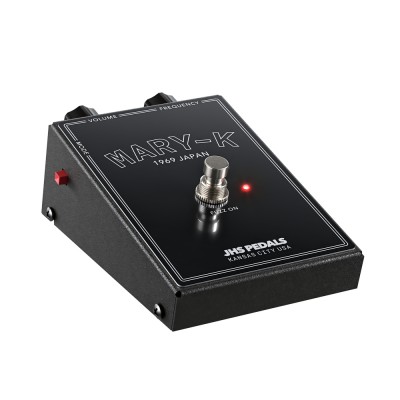
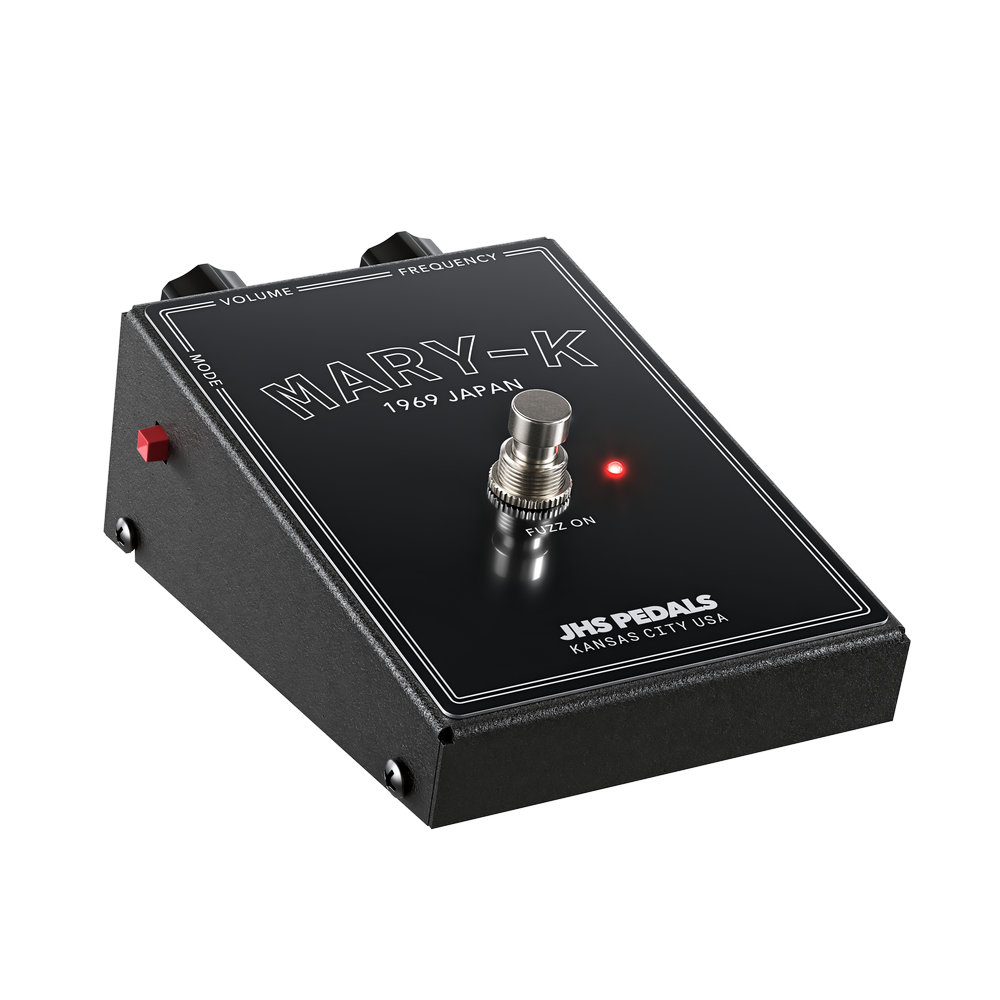
Kay Musical Instruments was founded by Henry "Kay" Kuhrmeyer on July 1, 1931. Although Henry quickly directed his production towards all types of string instruments (including basses, violas, and guitars), the company only entered the guitar pedal market in the late 1960s with a series of plastic, knobless pedals based on a footswitch and delightfully strange. Each of these four units (Fuzz Tone F1, Tremolo T1, Wah Wah W1, and Bass Boost B1) was housed in knobless, footswitch-style enclosures, allowing one parameter of each effect to be adjusted with the foot. The Kay Fuzz Tone was probably marketed in late 1968/early 1969. Originally designed as a budget version of the Shin-ei/Univox Superfuzz, this fuzz is one of The Edge’s preferred pedals. Fifty-four years later, JHS releases our version of the Kay Fuzz Tone: the Mary-K. We even added knobs and an expression pedal output for those who want to use it as originally intended.
Rather than using a footswitch chassis, we allow Mary-K users to control the Frequency knob with an expression pedal. We recommend the Nektar NX-P and Roland EV-5 expression pedals, but many other expression pedals should also work. Warning: some expression pedals may introduce hum/noise into the signal chain in environments with strong electromagnetic interference. Therefore, we recommend using plastic chassis expression pedals with short cables to avoid unwanted noise in high electromagnetic interference environments.