30-day satisfaction guarantee or your money back
Call us : +33 257 880 074
 en
en 









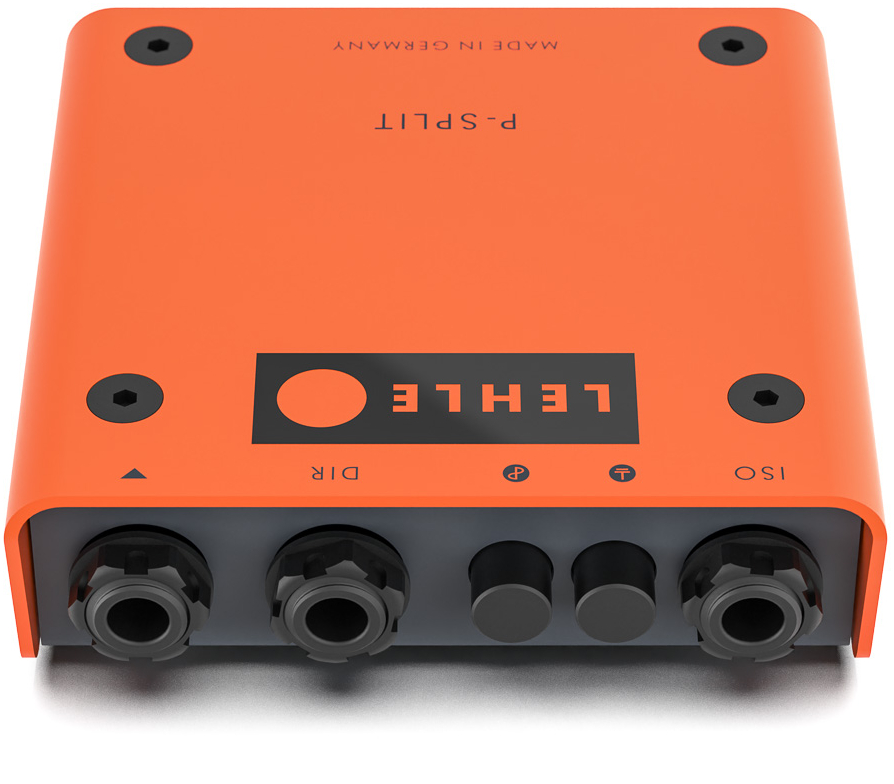


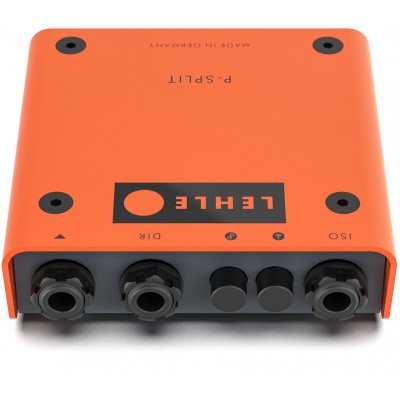
The LEHLE P-SPLIT III is not a traditional effects pedal, but it can transform a pedalboard and an entire rig: it is a splitter and a very high-quality passive direct box (DI), designed to keep your instrument's signature intact. At the heart of the unit, the LEHLE HZ transformer creates galvanic isolation between the two outputs, a crucial detail whenever you connect two powered devices on different outlets (or two devices whose grounds "don't get along"). The result: less hum, fewer surprises, and a cleaner signal right from the source.
Specifically designed for high-impedance signals, this transformer can also handle low-impedance signals without degradation. The P-SPLIT III thus becomes a trusted tool for multiplying routings: from simple simultaneous A/B to recording and reamping configurations, all with a decidedly audiophile approach.
The P-SPLIT III is aimed at guitarists, bassists, and musicians who want to duplicate a signal without compromise, as well as those who experience residual noise issues when connecting multiple devices. Live, it's ideal if you want to send your instrument to two amplifiers (stereo setup, clean/drive blend, guitar amp + bass amp, etc.) or to an amp and a mixing console. In the studio, it naturally partners with an audio interface and DAW to secure the recording and keep multiple processing options open.
Its usefulness is not level-dependent: beginners can solve their hum problems once and for all and enjoy simple routing. Intermediate and advanced users can build more creative chains (bi-amping, simultaneous miking, parallel chains). It's also an excellent choice for "serious" pedalboards, where reliability of the signal is as important as sound shaping.
In typical use, the P-SPLIT III receives a signal at the input and distributes it to two outputs: DIR (direct) and ISO (isolated). The ISO output is the core of the system: it delivers the signal in balanced or unbalanced form and benefits from galvanic isolation to drastically reduce ground loop risks. Going further, a phase inverter allows quick correction of polarity mismatches between two chains (for example, two amps placed differently, or an amp + console input combination) to avoid a "hollow" sound or bass loss caused by phase cancellations.
Another advantage: the P-SPLIT III can serve as a very simple hum elimination solution. If wiring between two devices generates residual noise, you can insert it between them to take advantage of the galvanic isolation of the ISO output. Finally, it can also act as a passive mono summing box for stereo signals: in this case, the DIR output can be used as a second input, a handy option to combine two sources into one mono signal in certain setups.
And since everything is passive, there's no power constraint: no batteries to monitor, no power supply to add, and consistent behavior on stage or in the studio.
The P-SPLIT III aims for a transparent approach: it does not seek to "enhance" the signal but to preserve it. The expected result is faithful reproduction of attacks, sustain, and playing nuances, with excellent respect for the dynamics of both single-coil and humbucker pickups, and solid bass response. Where many splitters can introduce a sense of loss, harshness, or noise, the galvanic isolation and high-impedance-oriented transformer design help maintain a clean and usable signal, especially when sending simultaneously to different types of equipment (amp + recording, amp + console, etc.).


 Verified
 Verified