30-day satisfaction guarantee or your money back
Call us : +33 257 880 074
 en
en 









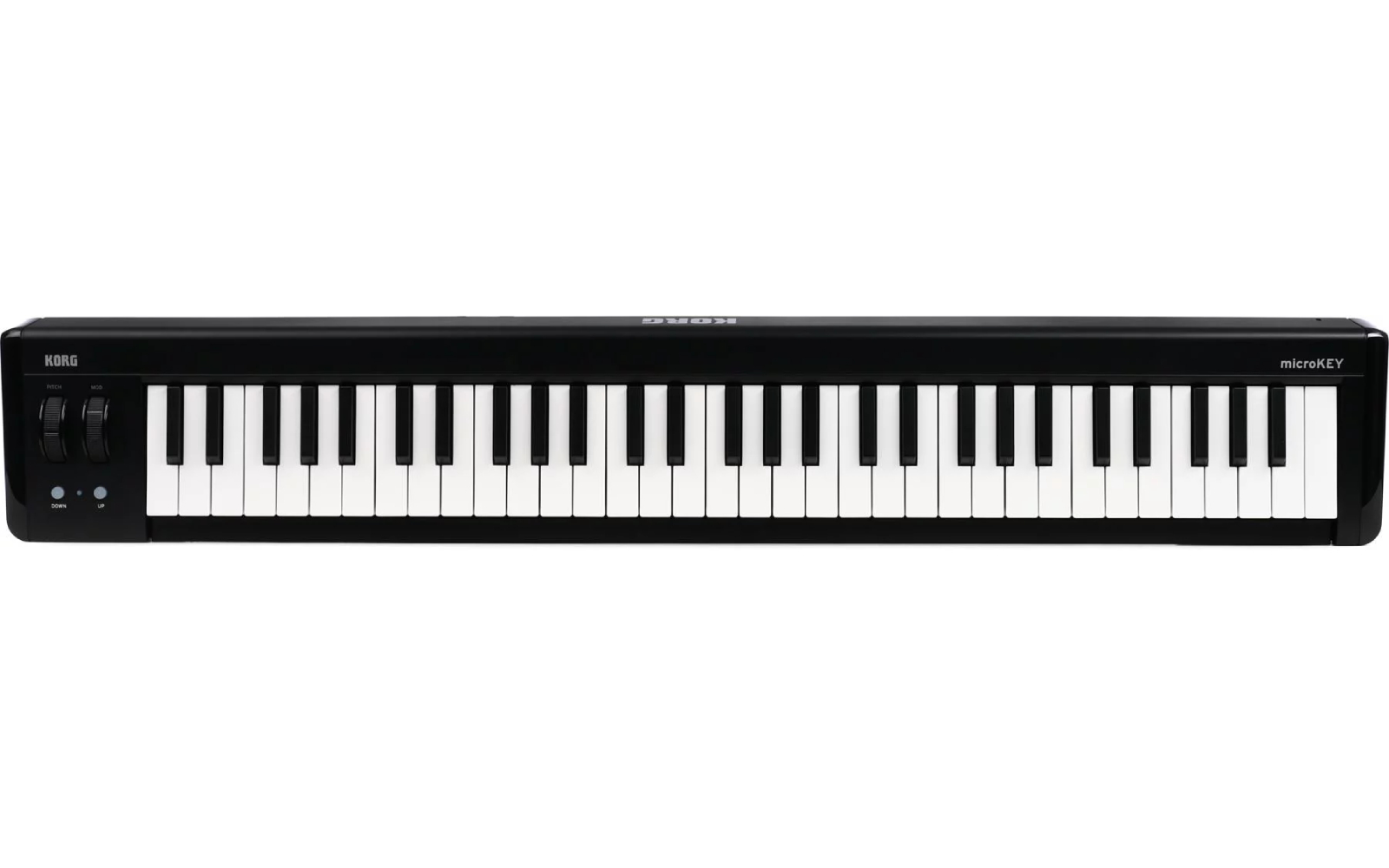


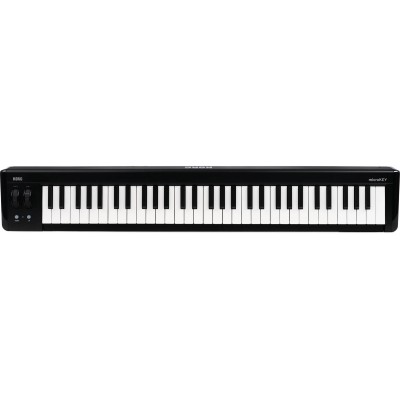
With the microKEY series, Korg aimed to solve a classic problem in home studios and mobile production: maintaining a credible playing feel while reducing footprint. The concept is based on mini keys with a natural touch, designed to remain "playable" even on demanding parts. The range comes in several formats (25, 37, 49, and 61 keys) to adapt the instrument to the desk, backpack, or a minimalist stage rig.
This second generation takes the "studio anywhere" approach further by integrating the ability to work easily with mobile devices. The result: a compact MIDI controller that remains relevant both for controlling virtual instruments on a computer and triggering sounds and sequences on a tablet or smartphone.
The Korg microKEY 61 is aimed at producers, beatmakers, film composers, live musicians, and content creators who want a lightweight USB master keyboard that's quick to set up. Its long format (61 keys) facilitates two-handed arrangements, splits, and chord playing, while remaining significantly more compact than a standard keyboard.
In the home studio, it becomes a simple and effective command center to control a software synth, program bass lines, record pads, or drive an orchestral library. On the go, it allows for a real playing range without carrying a bulky keyboard: ideal for composing on the move, sessions at collaborators' places, or a creative corner in a limited space.
The microKEY 61's strength is its balance between compactness and comfort. The velocity-sensitive mini keys allow you to nuance your playing (piano, synth, drums, strings) and maintain consistent response during MIDI recordings. This format also facilitates fast phrases and position shifts while remaining stable enough for clean chord playing.
For expressiveness, Korg includes Pitch Bend and Modulation wheels: essential for lead bends, vibrato, filter opening, or any MIDI assignment. The Octave Up/Down buttons complete the set for quick access to low or high registers without interrupting your creativity, a real plus when controlling extended instruments or heavily modulated synths.
Thanks to USB bus power, installation is immediate: plug and play, no power adapter needed. The connection to iPad/iPhone (depending on your setup) enhances the appeal of this second generation for modern workflows: production on apps, mobile virtual instruments, or capturing ideas on the fly. The 2 USB ports add connection flexibility depending on your working environment.


 Verified