30-day satisfaction guarantee or your money back
Call us : +33 257 880 074
 en
en 









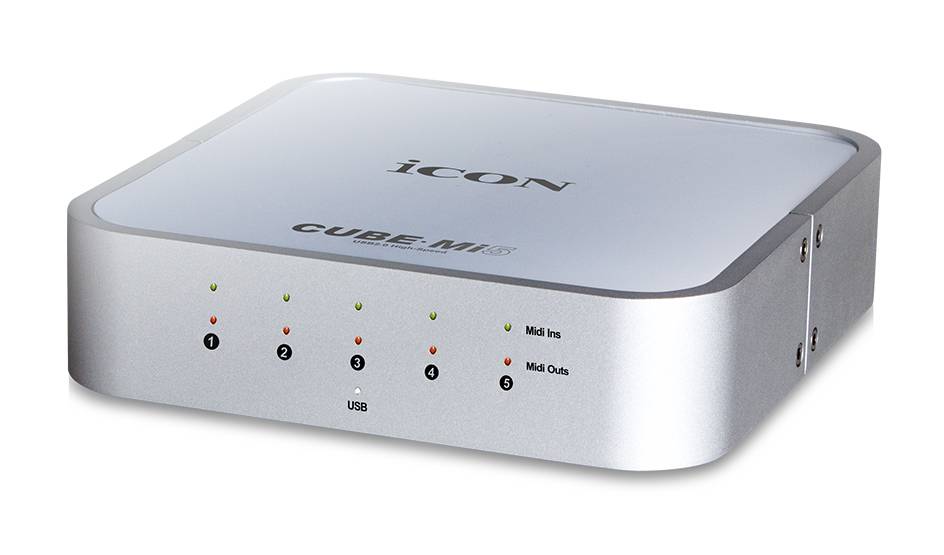


As hybrid studios have multiplied hardware instruments (master keyboards, synthesizers, modules, drum machines) while keeping a DAW at the center of the workflow, multiport MIDI interfaces have become essential. A 5x5 solution precisely meets this need: it avoids a cascade of adapters, simplifies cabling, and offers a clear view of MIDI activity port by port. Here, the approach focuses on stability and integration, with USB 2.0 connectivity and broad compatibility, making it suitable for both home studios and hardware-oriented control rooms.
This interface is aimed at those who want to control multiple MIDI machines without compromise: electronic music producers with several synths, composers orchestrating via expanders, live keyboardists distributing zones and channels across different instruments, or studios wanting to maintain a wired setup ready to record. Compared to a 1x1 MIDI interface, the gain is immediate: you can separate streams (clock, notes, CC, automation) by port, limit channel conflicts, and organize routing more clearly within your DAW.
Comfort is also felt daily: USB bus power reduces the gear to carry, while activity LEDs per port allow quick diagnosis of a cable, channel, or silent instrument. The result: a cleaner setup, faster to assemble, and more reliable when chaining sessions or assembling a stage configuration.
The USB 2.0 connection ensures a high-speed link suitable for multiport configurations, and the interface is designed for easy setup thanks to plug and play on Mac and Windows. You avoid the historical constraints of internal interfaces: no IRQ configuration, no I/O address, and no DMA channel. The goal is clear: plug in, route, play.
For Windows users, multi-platform support relies on the MultiPlatTM driver (Windows only), available in 32-bit and 64-bit versions. This approach aims to maintain broad compatibility, including on older systems, while ensuring stable behavior in modern audio/MIDI hosts. In a studio where multiple machines coexist, this continuity is a real asset to keep a template operational without reconfiguring the entire routing with each change.
The mention of perfect MIDI synchronization is essential for setups where clock, start/stop, and sequences must remain locked: drum machines, arpeggiators, hardware sequencers, and synchronized effects. Add to this MIDI-in and MIDI-out indicators for each port, and you get immediate visual control of what is coming in and going out, valuable for optimizing routing, spotting double clock transmissions, or verifying that an instrument is receiving the expected data.
The interface comes with Bitwig 8Track, an effective entry point for production and arrangement, as well as Dotec audio plugins to complement your sound palette and processing. Whether you are expanding an existing setup or building your first hardware-oriented production environment, these additions facilitate getting started and encourage a creative workflow from the first connection.