30-day satisfaction guarantee or your money back
Call us : +33 257 880 074
 en
en 









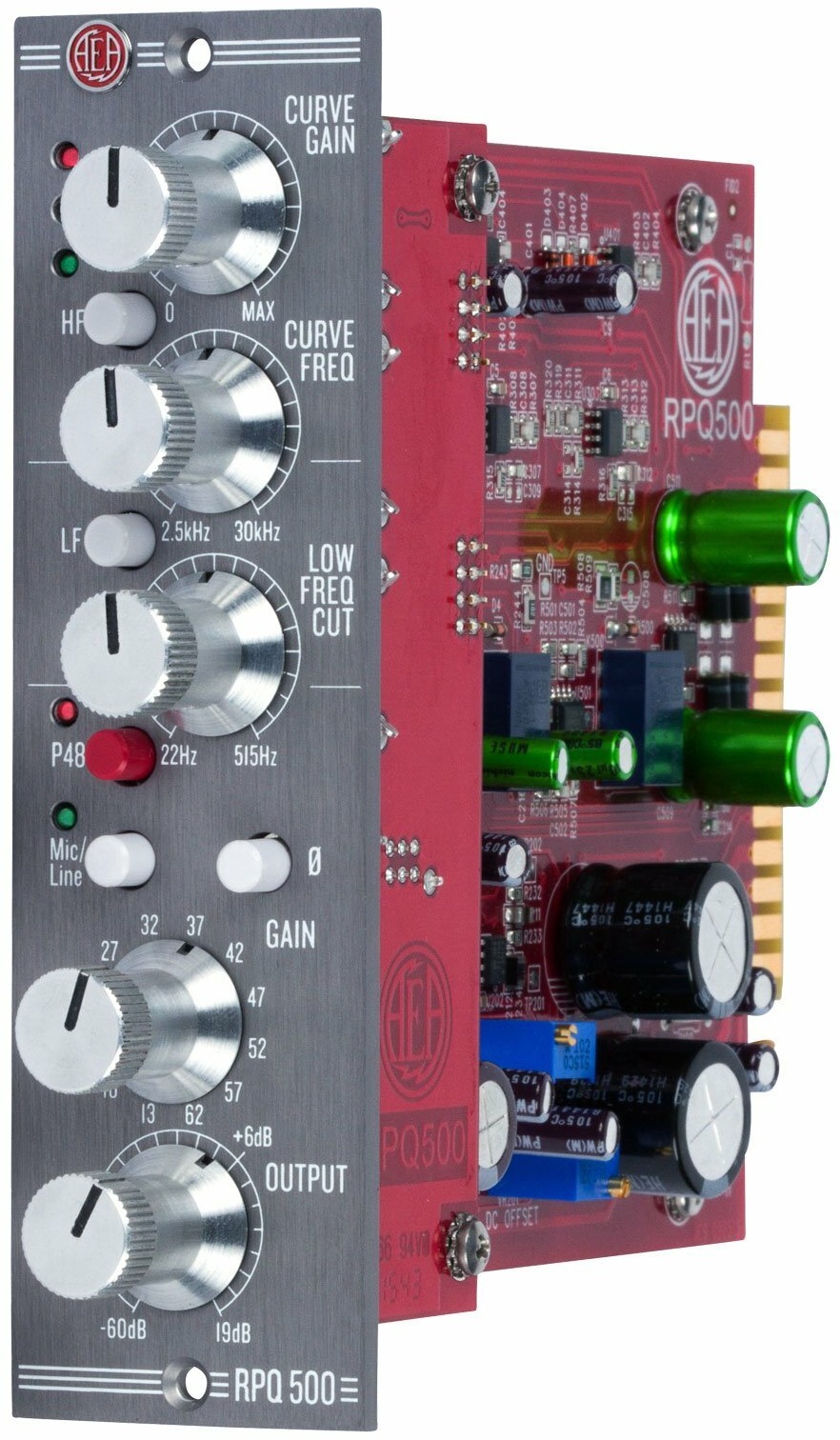


With the RPQ500, AEA offers demanding sound engineers and home studio users a preamp specifically tailored for ribbon microphones, in an easy-to-integrate API 500 format. The goal is clear: to provide ample, clean, and stable gain while maintaining a natural sound that respects the ribbon's signature. Where many general-purpose preamps quickly reach their limits (noise, lack of level, muddy bass), the RPQ500 is designed to preserve a sense of openness and depth, even with low-output ribbons and more distant placements.
The AEA RPQ500 is aimed at those recording with ribbons who want a preamp "made for that": acoustic guitars captured from a distance, strings played pianissimo, brass without harshness, soft and spacious overheads, or ambient room miking. Thanks to its gain reserve, you are no longer forced to move the mic closer just to gain level, allowing better placement choices for tone, depth, and room/source balance.
The RPQ500 is also relevant in the studio for broader uses: processing a stereo bus (2 bus) or a line source, with the same musicality and curve control logic. The 500 series format facilitates creating a custom chain (preamp, dynamics, conversion) while maintaining quick adjustment ergonomics for daily use.
Passive ribbon microphones often require a preamp capable of high gain without "cracking" or noise. The RPQ500 combines a JFET stage and a low-noise architecture to deliver massive amplification while staying clean. The result: quiet sources become usable with a comfortable signal-to-noise ratio, and transients remain clear without artificial harshness.
Input impedance is critical with ribbons: too low, it can choke bass and reduce the sense of spaciousness. The RPQ500 offers a Mic input at 10 kOhm to let the mic breathe and maintain the "rich and natural" sound sought after with this type of transducer. Practically, this translates to a fuller low end, denser midrange, and a sense of relief that helps the source find its place in the mix.
The integrated CurveShaper equalizer is not a gimmick: it's a recording tool to shape the ribbon sound even before mixing. The bass shelf quickly controls bass buildup (common with proximity effect), while the treble shelf adds presence and "air" with slope control, particularly useful to restore openness to a ribbon or to provide a clearer high end on a stereo bus. This approach saves time, avoids extreme downstream corrections, and secures a more polished sound right at recording.
The RPQ500 includes indispensable features for real-world use: phase inverter to manage multi-mic setups and polarity alignment, switchable 48 V phantom power for microphones that require it, and stepped gain control for more consistent recalls. As always with ribbons, the use of 48 V should be considered carefully depending on the mic and wiring, but having a dedicated switch adds appreciated flexibility in a 500 series rack.