30-day satisfaction guarantee or your money back
Call us : +33 257 880 074
 en
en 









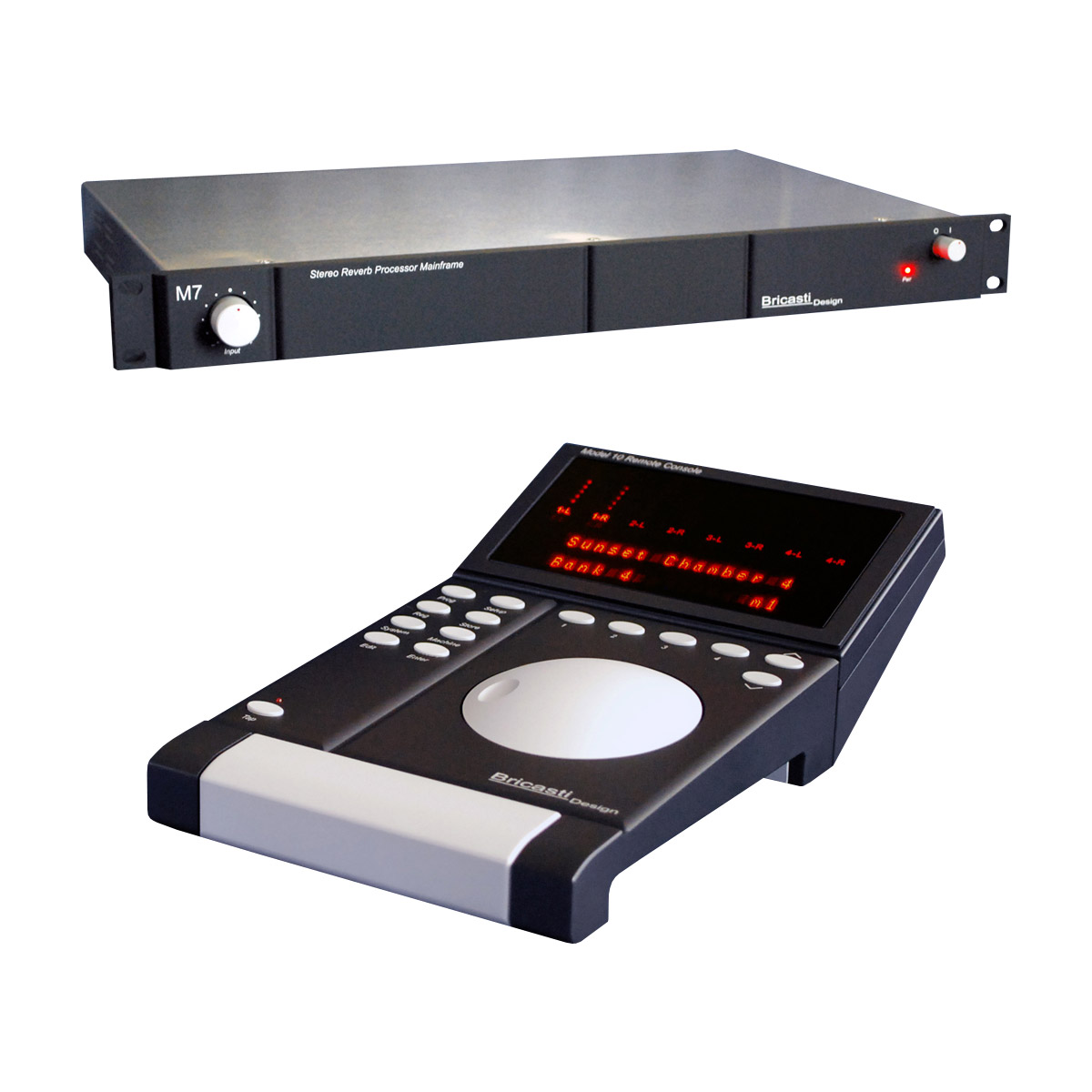


The BRICASTI System 1 brings together, in a single pack, the key elements of a professional integration: the M7N processor and its M10 remote control. The idea is simple: keep the processing in a logical location (rack, technical furniture, bay) while maintaining control over the settings at the most important point in the studio, the listening position. This "processor + dedicated control" approach fits into a high-end workflow logic, where ergonomics matter as much as processing quality, especially when chaining revisions, session recalls, and client approvals.
This pack is aimed at studios and creators who want a central processing processor that can be comfortably controlled: sound engineers in mixing, sound designers, composers, broadcast control rooms, post-production suites, or recording rooms with a remote technical bay. The remote control becomes a real asset as soon as the processor is out of reach: you adjust, compare, refine, without breaking the listening flow or making multiple trips to the rack.
In a modern workflow, remote control also helps maintain precision on the micro-adjustments that make a reverb credible in a mix: dosage, spatial sensation, front-back placement, coherence between multiple sources, or quick adaptation to a voice, snare drum, strings, or ambiance. The result: faster work and, above all, more reliable decision-making, because everything is done in the right place, at the right volume, in the right listening context.
The M10 remote control is designed to offer direct operation of the processor, with a studio-oriented workflow logic: access settings, refine them, and stay focused on what you hear. Paired with the 10m connection cable, it allows a clean and rational installation: the processor can remain in a technical area, while the control is placed near the master keyboard, console, or monitoring controller.
In practice, having the processor and its remote control in the same pack avoids "makeshift" configurations and secures deployment: compatibility, appropriate cable length, and quick setup. This is particularly useful in environments where efficiency is essential: sessions with artists, project rotations, frequent recalls, or situations where setup and teardown happen regularly.
The System 1 emphasizes precise adjustment at the listening point: you can work more finely on spaces, correct diffusion excesses faster, adjust a sense of depth or width, and control the wet/dry balance in a real mixing context. This ergonomics helps stay musical, as less time is spent manipulating controls and more time is spent listening.