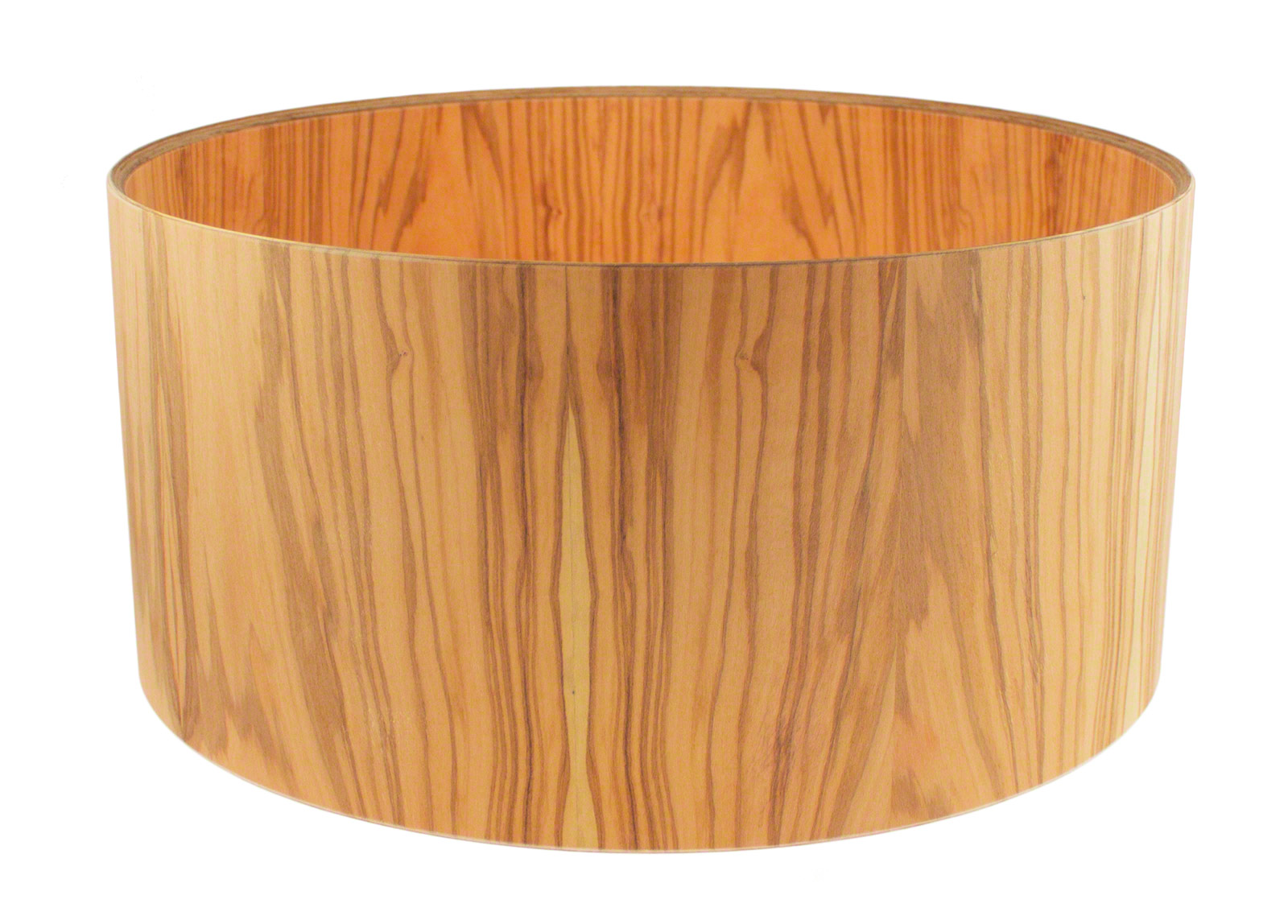
CVL designs and manufactures shells in Italy aimed at demanding drummers, luthiers, and custom shops seeking a consistently high-quality foundation. This olive wood shell fits within a "custom" approach: you start with a premium, unperforated shell and define the hardware, its placement, and the final finish yourself. It's an ideal solution for creating a unique bass drum or restoring an instrument while maintaining a modern, controlled manufacturing standard.
This bass drum shell is primarily intended for intermediate to expert drummers, backline technicians, and enthusiasts who want to customize their instrument without compromise. Olive wood is particularly suited to contexts where a clear and present bass drum is expected: rock, pop, funk, fusion, contemporary studio music, as well as amplified live settings where attack precision and low-end stability make a difference. For beginners, this product remains accessible but assumes comfort with drilling and hardware alignment or the option to entrust the operation to a workshop.
The key point is the unperforated shell: you retain control over the placement of lugs, mounting system, relief vent, and any additional hardware. To facilitate reliable positioning, you can use a Sparedrum LO16 or LO26 template to correctly place future drilling holes. For a clean result, it is recommended to use drill bits suited for hardwoods and to measure and verify the exact diameters required by your hardware before any operation: each lug or mount reference may require different dimensions.
Olive wood is a dense wood with a pronounced grain that tends to produce a quick and defined response. On a bass drum, this generally translates to a sharp attack, a well-controlled low end, and present midrange, helping the note remain clear in a busy mix. The 7.2 mm thickness helps retain body and projection while allowing the shell to breathe for natural resonance.
The exclusive manufacturing process developed by CVL, which uses less glue than traditional methods, aims to better preserve the wood's vibrational behavior. Practically, this often results in a more "organic" feel: the bass drum responds easily, with perceptible shell vibration and controllable sustain depending on the choice of heads, tuning, and damping. The standard 45-degree inner bearing edges contribute to a solid head seating, promoting tuning precision and stability.