30-day satisfaction guarantee or your money back
Call us : +33 257 880 074
 en
en 









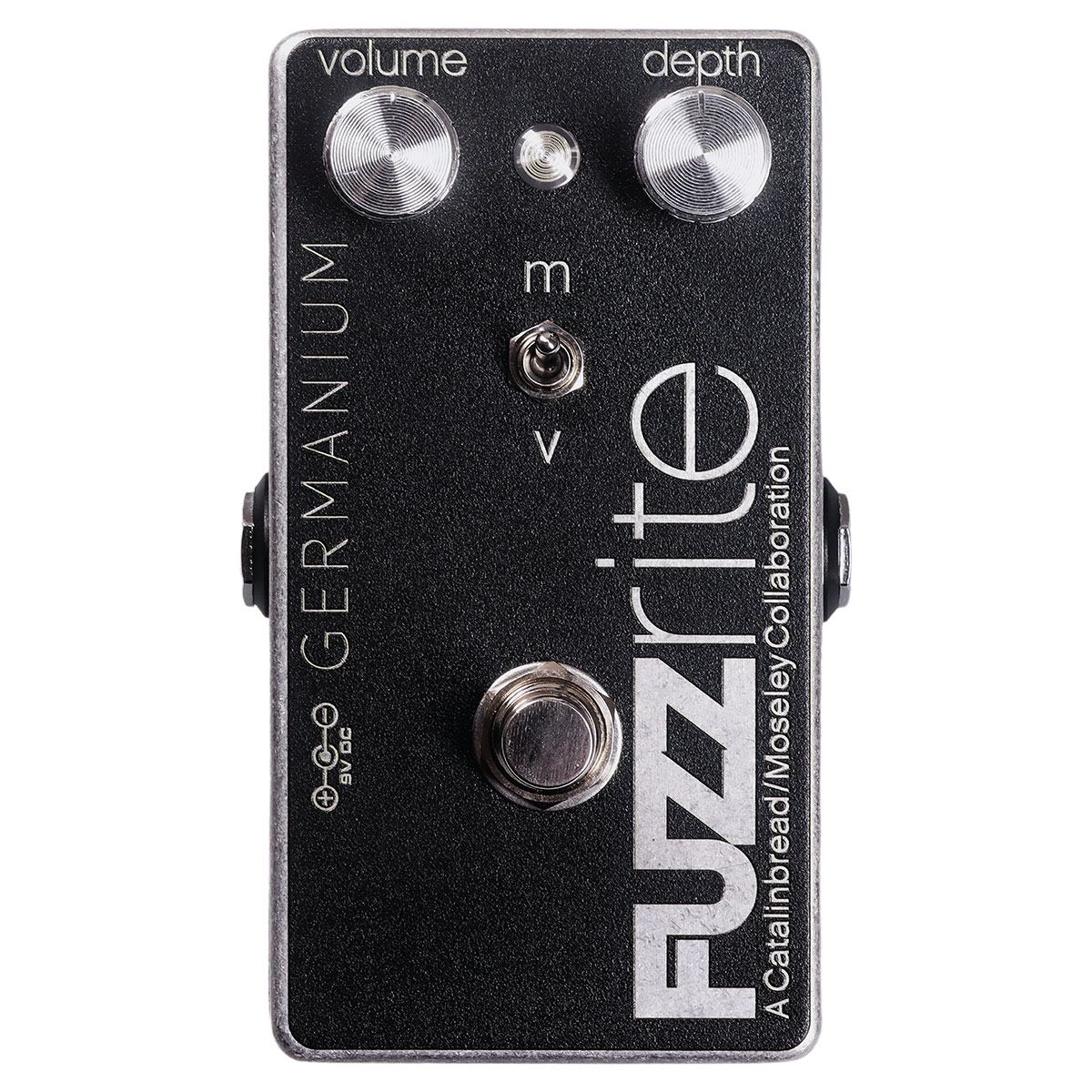


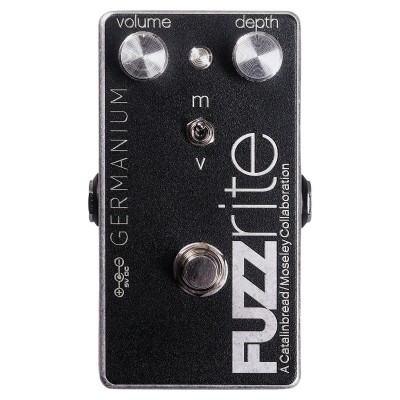
Between 1966 and 1968, Mosrite produced two versions of its Fuzzrite circuit: one silicon-based and one germanium-based. The germanium variant became legendary, produced in very limited quantities, and associated with the explosion of fuzz sounds in late 60s psychedelic rock. Catalinbread accessed a reference unit and used it to offer an ultra-credible reinterpretation, while adding an option designed for today's pedalboards and amplifiers.
The core concept remains intact: a fuzz with a sharp personality, a "splatty" grain, capable of sounds that are rough, sinuous, and downright addictive as soon as you attack a garage riff or a unison lead line.
The Catalinbread Fuzzrite Germanium is aimed at guitarists (and curious bassists) who want a characterful fuzz, more distinctive than a "one-size-fits-all" fuzz. It's ideal for garage rock, psychedelic, dirty surf, proto-punk, alternative rock, and any context where you want a sound that "speaks" effortlessly.
In the studio, it adds an instantly recognizable color, perfect for doubling rhythm guitar, thickening a lead, or creating almost synth-like textures. Live, it naturally cuts through the mix thanks to its bite and harmonics. And on a pedalboard, it's an excellent "signature" fuzz to bring out at the right moment.
The interface is intentionally straightforward. The Volume controls the output level: turning it up can also push the amp's input to add body and extra smoothness, as if the fuzz "melts" more into the amplification. The Depth, the true heart of the pedal, acts like an internal mix between gain stages: at minimum, the sound is cleaner and thicker; as you increase it, the fuzz becomes hungrier, more "gated" in places, with harmonics that can evoke a pseudo ring-mod octave effect, up to a sharper, more aggressive, and very incisive maximum.
The Modern/Vintage switch changes the perceived bass amount by altering the output filtering: in Vintage, you get the typical low cut (very sixties); in Modern, the low end is boosted to better feed modern amps, larger cabinets, or lower tunings. This is a valuable option if you like the Fuzzrite's attack and edge but want to avoid a "thin" impression on certain setups.
Like many "old-school" fuzzes, it reacts strongly to what precedes it. For maximum dynamics, place it at the very start of the chain (before buffer, buffered tuner, active wah, etc.). With other overdrives/distortions, feel free to experiment: depending on the order, you'll go from a very biting fuzz to thicker, almost purple textures with different sustain.
Expect a nervy, gritty, and expressive fuzz: a present high end, a controlled "tear" sensation, and a playing response that encourages working with the guitar's volume. Lowering the instrument's volume often yields a tamer, crunchier grain while retaining the slightly raspy character typical of germanium. Increasing the Depth makes the pedal more acidic, more saturated, with a very musical bloom on note sustain.
It can also produce more "hungry" and staccato textures (when seeking the voltage-starved vibe), perfect for psychedelic leads and garage riffs. Artist-wise, it carries the spirit of historical users associated with the Fuzzrite circuit, and the Catalinbread Fuzzrite Germanium version is notably spotted on pedalboards of artists like Luke Reynolds (Guster).