30-day satisfaction guarantee or your money back
Call us : +33 257 880 074
 en
en 











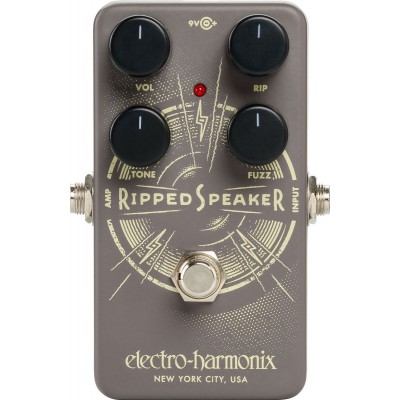
The Ripped Speaker pays tribute to an era when distortion wasn't always a "clean" effect: battered speaker cones, temperamental console channels, worn components... all these "mistakes" defined textures that became iconic. Electro-Harmonix translates this folklore into a modern fuzz, capable of reproducing these lo-fi colors with little fuzz, then switching to a more monumental saturation wall when you push the control.
Released in 2021, it fits within EHX's line of creative and straightforward pedals: a distinctive sonic concept, but with enough control to easily integrate into a contemporary rig.
The Ripped Speaker is aimed at both guitarists and bassists seeking an expressive fuzz, with character and a real ability to "tell a story" through sound. At light settings, it excels on lo-fi rhythm parts, leads that evoke vintage recordings, or intentionally damaged textures for garage, indie, dirty blues, and alternative rock.
When pushing the fuzz, it becomes an excellent ally for parts that need to take up the whole space: stoner, punk, noise, modern rock, or any context where you want a straightforward and spectacular saturation. In the studio, it helps create tracks with a strong signature; live, it cuts well through the mix thanks to its dynamic behavior and wide attack palette.
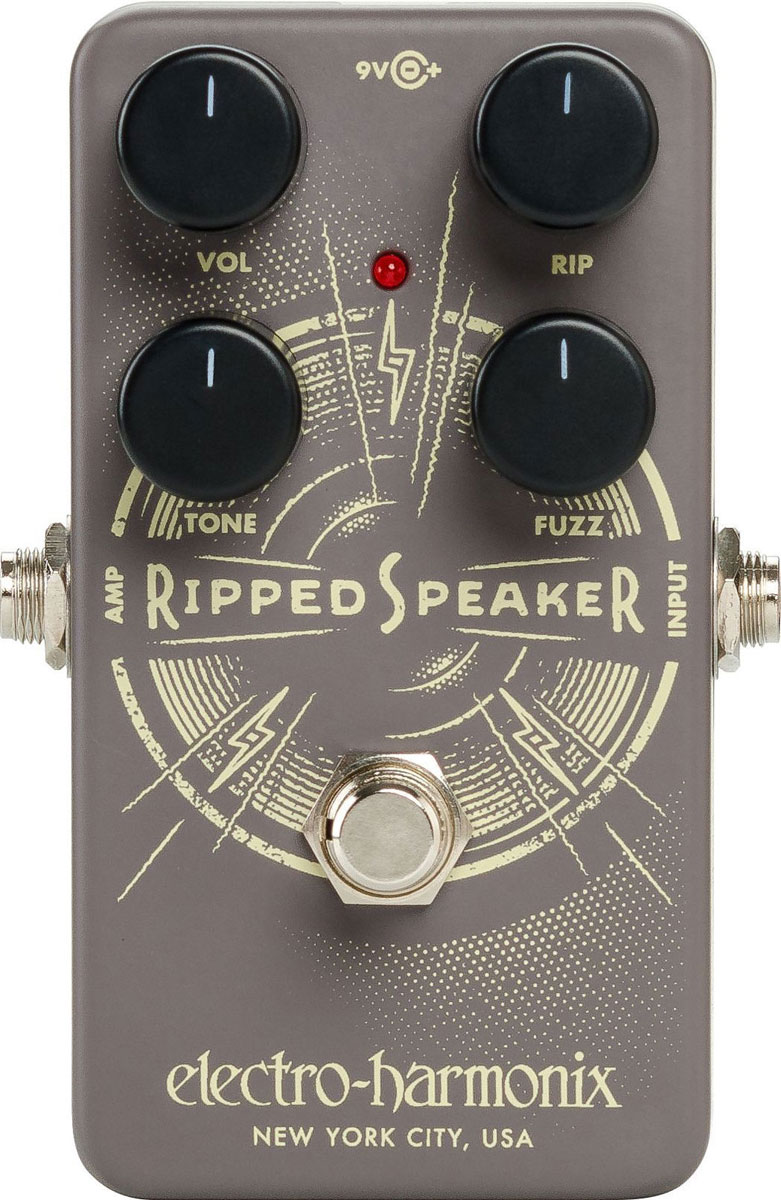
The heart of the Ripped Speaker is its RIP control: a bias adjustment that changes how the signal clips (at the top and bottom of the waveform). At noon, you get a very musical balance point: a well-biased, dense fuzz with bite, without unnecessary harshness. Turning the RIP clockwise, the signal can become more compressed and "muffled," perfect for dead drum-type effects or intentionally suffocated textures.
In the other direction, the fuzz takes on a more "gated" character: the attack remains snappy, then the sound can cut off faster, ideal for choppy riffs, very rhythmic mono phrases, or almost synthetic effects. The TONE control is active and works like a tilt EQ: neutral at noon, darker when turned down (more bass presence, softened highs), brighter when turned up (emphasized highs, tighter lows). This is complemented by a true bypass switch to preserve signal integrity when the effect is off.
The Ripped Speaker's sonic signature oscillates between two worlds. On one side, a lo-fi distortion reminiscent of a tired speaker: grainy texture, slight roughness, and that little "tape-recorded" vibe that adds depth to simple riffs. On the other, a modern, fully saturated fuzz: more sustain, more density, and an immediate power feel, particularly effective on open chords and monophonic lines that need to stay upfront.
Its strength is responsiveness : depending on your attack, the RIP setting, and the TONE position, you move from a thick, stable fuzz to a more unstable, almost "crackling" fuzz without changing pedals. The result: a guitar (and bass) effect pedal that doesn't just add gain but truly transforms the signal behavior and playing feel.