30-day satisfaction guarantee or your money back
Call us : +33 257 880 074
 en
en 









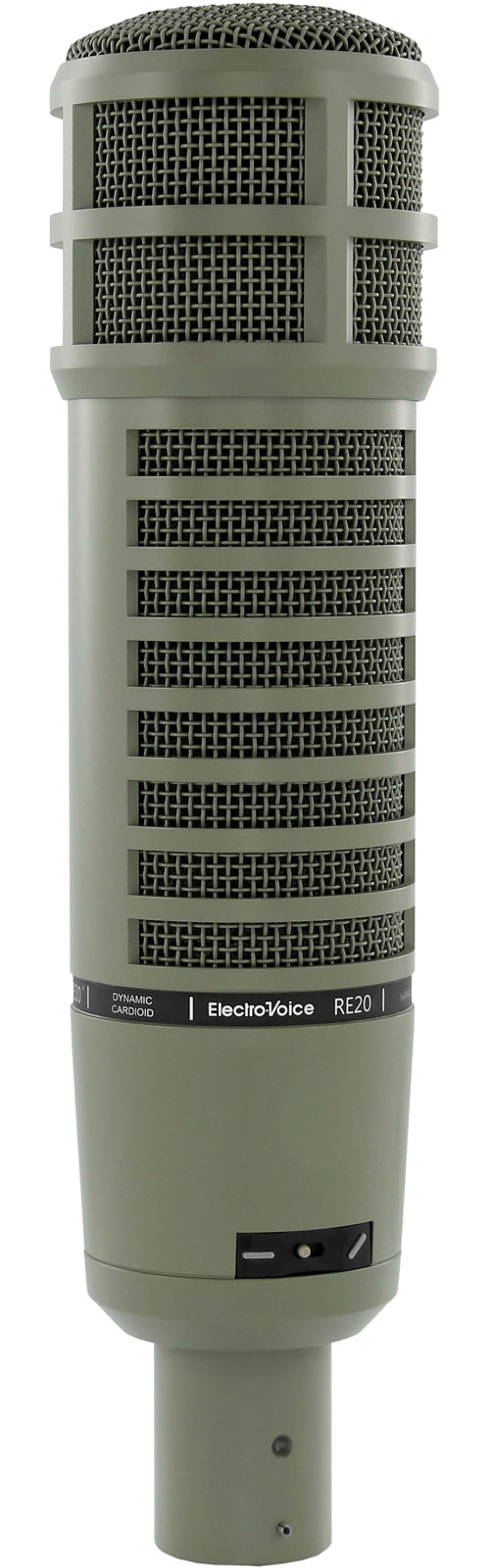


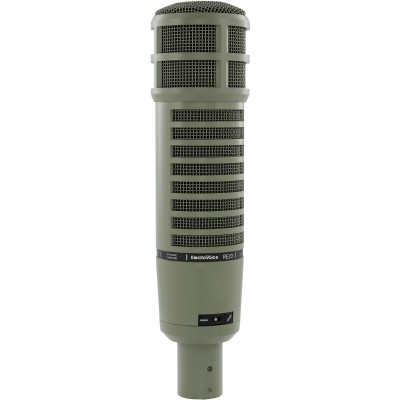
The RE 20 is one of those microphones instantly recognizable by both listeners and sound engineers. Designed to meet the demands of broadcasting, it has established itself over time as a standard for achieving an intelligible, present, and stable voice without unwanted effects that complicate mixing. Within the Electro Voice range, it embodies the "work tool" philosophy: a proven design intended to handle back-to-back takes and sessions with exemplary consistency.
Rather than chasing flattering effects, the RE 20 aims for sonic reliability: it remains consistent from one take to another, which explains its enduring presence on radio, in voice booths, and in numerous studios.
The Electro Voice RE 20 broadcast dynamic microphone is aimed at content creators, hosts, streamers, podcasters, and voice actors who want a "ready for broadcast" sound with minimal post-processing. Its highly controlled approach to plosives and breath noise facilitates close-miking, typical of modern spoken voice.
In music production, it is also relevant whenever a solid and controlled capture is sought: sung vocals, brass instruments, guitar or bass amps, and even certain percussion instruments. Its cardioid pattern helps maintain focus on the source, which is practical in home studios or imperfectly treated rooms.
The RE 20 integrates a wind and pop filter system, useful for reducing plosives and air noises without always relying on external accessories. Its internal suspension limits the transmission of vibrations (mic stand, desk, handling), a real advantage in podcasting and voice-over work where close proximity to the microphone is common.
Its frequency response is tailored for voice to maintain presence and clarity while keeping the low end controllable. The switchable low-cut filter helps clean up rumble, room vibrations, or excessive bass due to proximity effect, saving mixing time and securing the take right from recording.
Described as free from sonic coloration, the RE 20 primarily seeks neutrality and stability. This is precisely what makes it effective in broadcasting: the voice remains natural, with consistency that handles equalization and compression well. If you want a serious, intelligible capture that is easy to place in a mix, it is a particularly relevant choice.



 Certified
 Verified
Certified
Verified
Verified
Verified
Certified
Verified
 Verified
Verified
Verified